• Email
    • Facebook
    • Instagram
    • Pinterest
    • Twitter

Girl and Her Kitchen

Plan. Make. Eat. Design. Craft. Create. Celebrate. Life.

  • Home
  • About the Girl
  • Recipe Index
  • We LOVE
  • Weekly Menu

Breakfast

Easy Sunday Breakfast in Bed

 My husband has difficulty relaxing. He doesn’t know how to sit down and enjoy the simple things of life, like watching a movie (you have to sit in one place too long), reading a good fiction novel (“I should be learning something if I’m reading…”), going out for a long, slow dinner (“Where’s the check?”) or just plain relaxing (“I’m bored!”). It’s like trying to lasso an eel.

It’s a difficult thing to live with because if there’s one thing I know how to do it’s relax. I like nothing better than to lose myself in a good book or movie, linger over a long, luxurious dinner out, and my idea of real fun: lounging around on the couch listening to the rain. Try as I might, I could never get him to see the point of any of that.

But–and this took many years of marriage–I’ve finally gotten him to stay in bed on Sunday morning. It took a good cup of coffee, a fresh newspaper, and a really lovely breakfast.

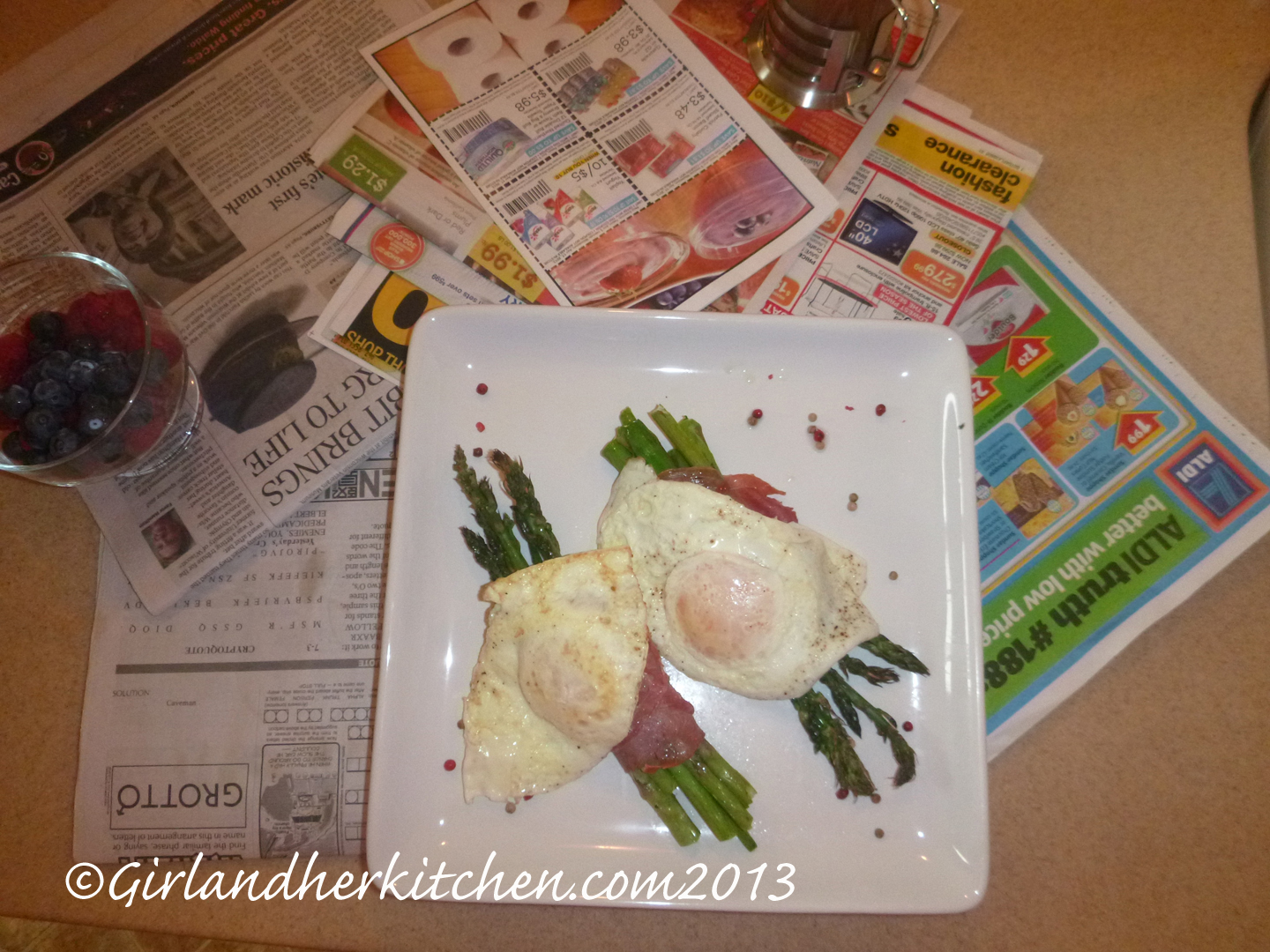
Of course, with Mr. Ants-in-His-Pants, it has to be a quickly made breakfast and Proscuitto-Wrapped Asparagus and Eggs fits the bill perfectly. Plus, an added bonus, it doesn’t require me to keep a lot of things stocked in the fridge to make it.

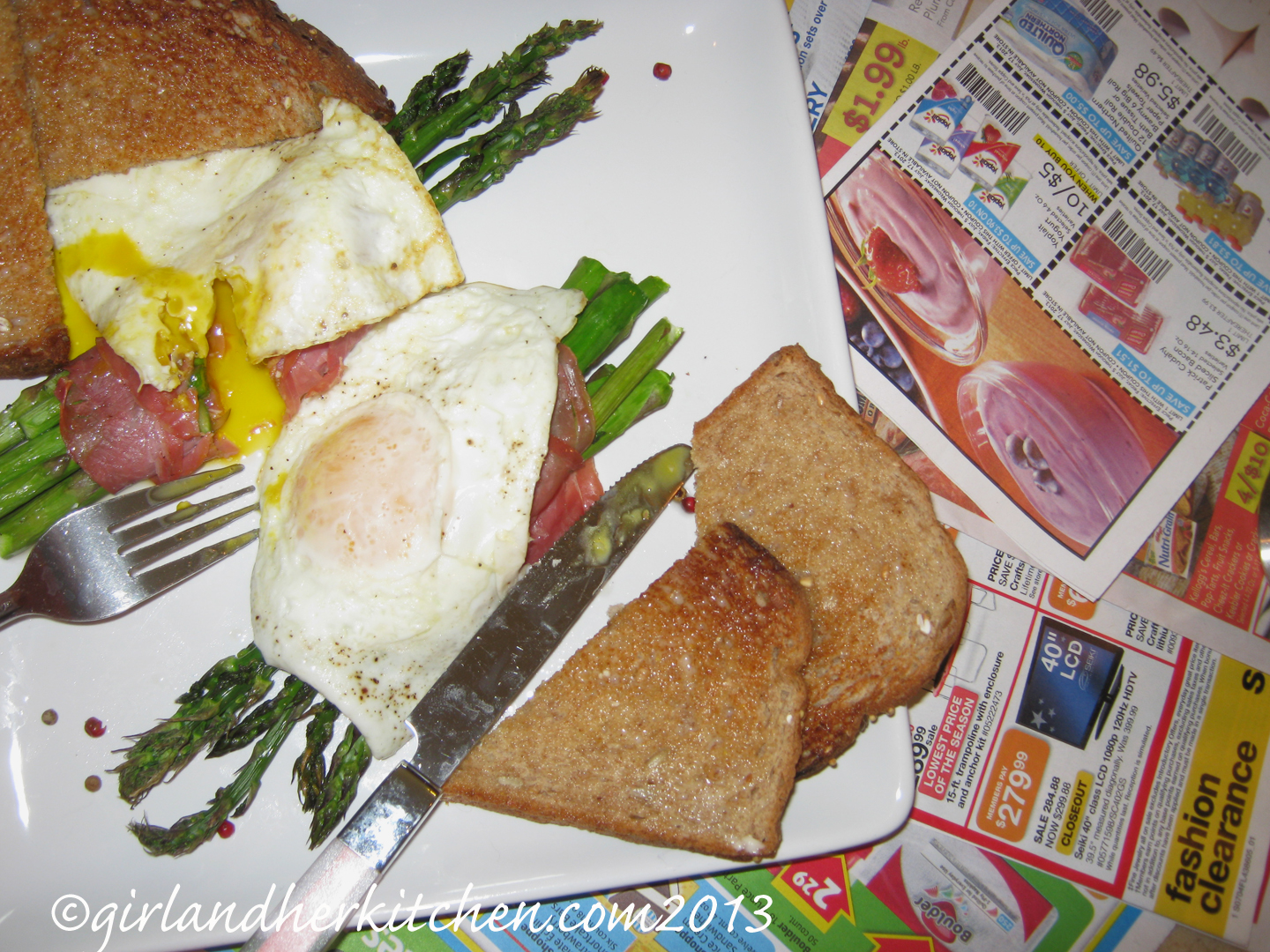
It has an amazingly satisfying flavor. Something about the egg yolk mixed with the asparagus is just so seductive and perfect. It’s as if they were made for each other. Add in the saltiness of the proscuitto and you have a perfect blending of taste sensations to keep anyone, even the fidgetiest of men, relaxing in bed on a lazy Sunday morning.
Proscuitto-Wrapped Asparagus and Eggs

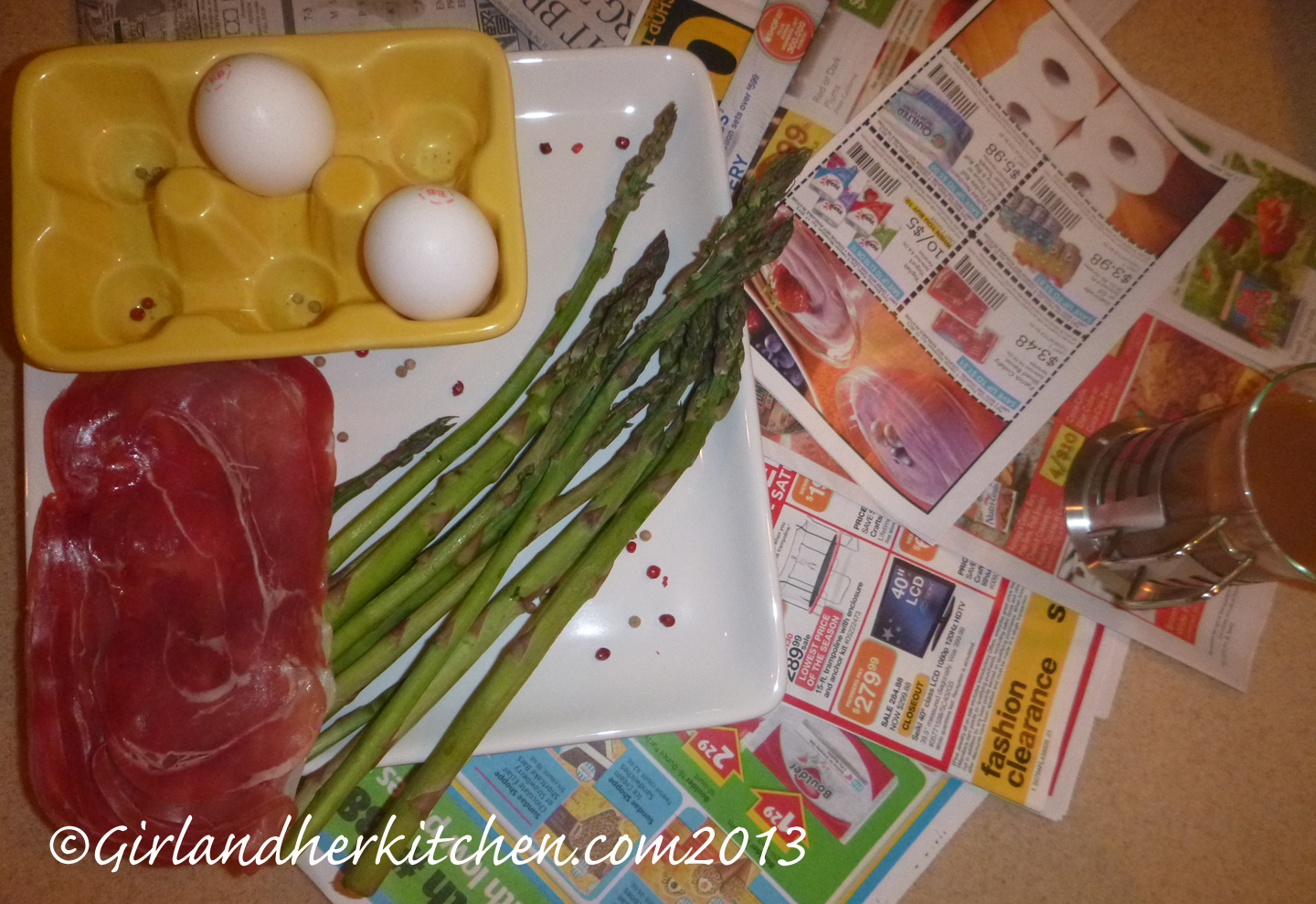
4 slices of Proscuitto
6-8 spears of asparagus
1 Tsp oil
2 eggs
salt & pepper to taste

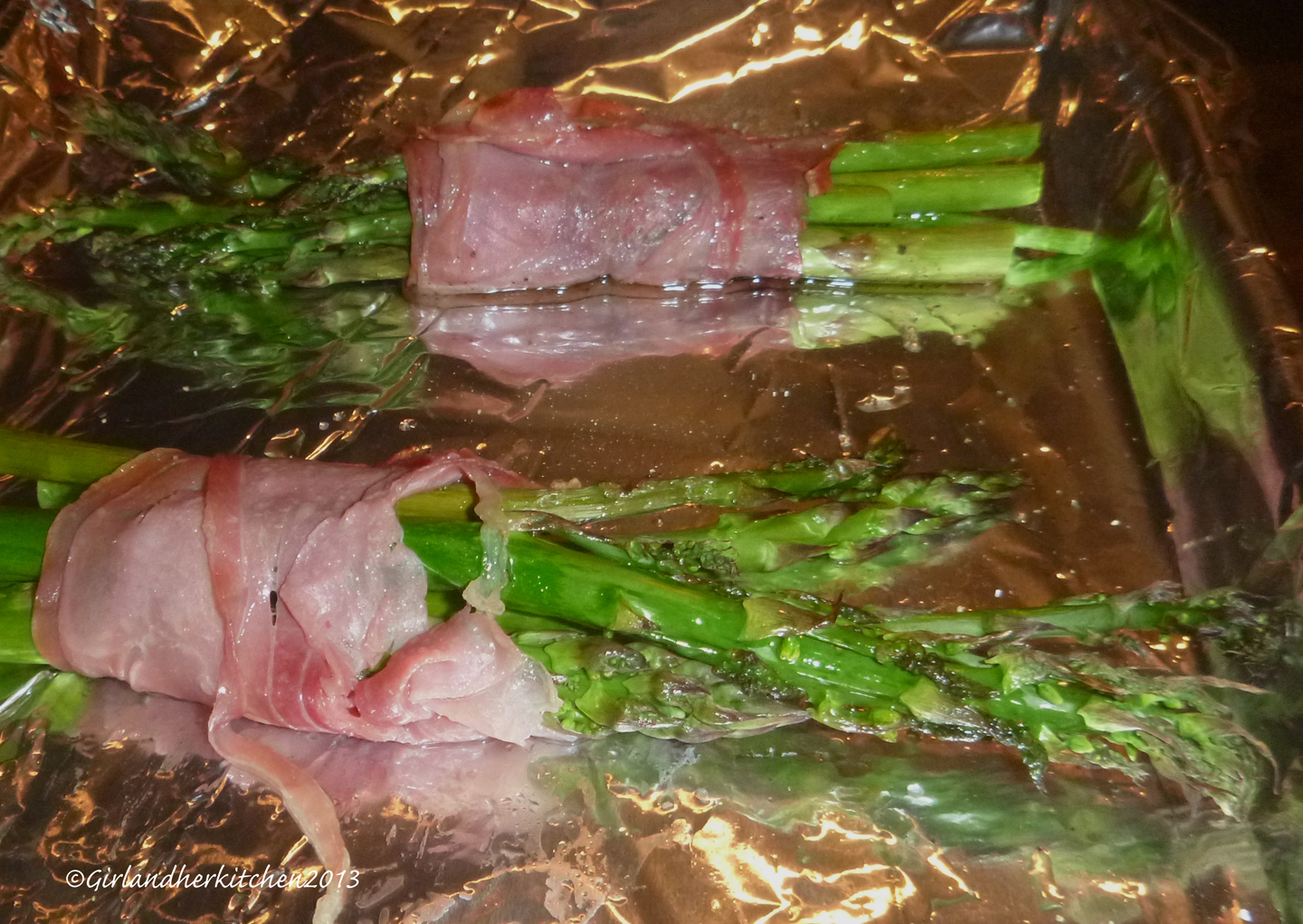
Preheat oven to 450 degrees. Wrap 3 to 4 spears of asparagus in two slices of the proscuitto. Do the same with the other 3 to 4 spears. Cover a baking sheet with foil and coat with cooking spray. Place wrapped asparagus spears on it. Drizzle oil over the wrapped spears and sprinkle with salt and pepper. Bake for 10 to 15 minutes. Remove from oven and set aside.
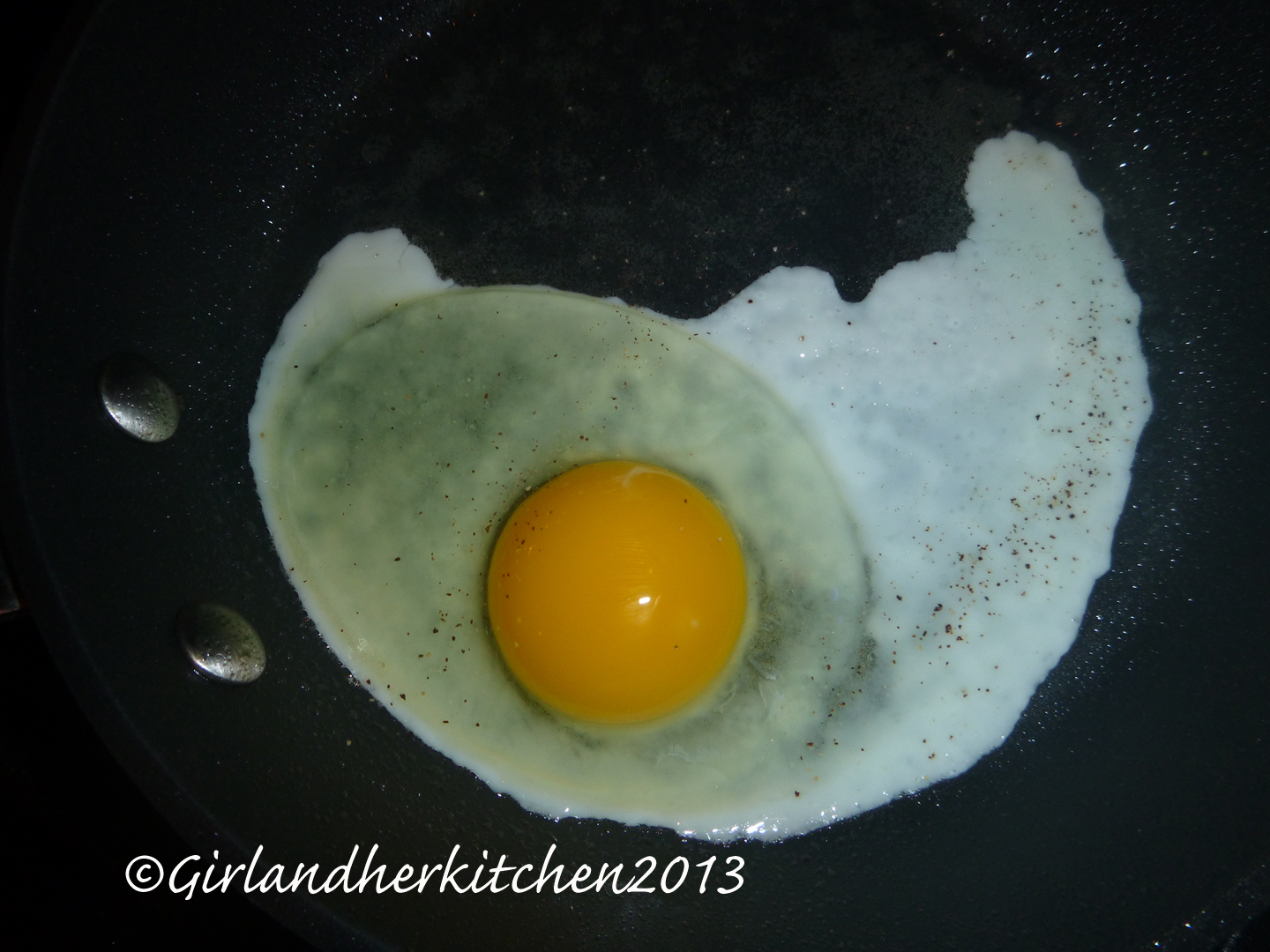
In a frying pan coated with non-stick cooking spray, crack two eggs. Fry, over medium low heat to your liking, sunny side up or over easy.
Place the asparagus spears, one bundle to a plate, on two plates. Top with a fried egg, and serve. I recommend some toast, a cup of piping hot coffee and some fruit to round out the meal. And, don’t forget the Sunday funnies!

Heather

Leave a Comment

Appetizers Pizza

Quick Grilled Naan Pizza


On weekends, my husband often makes dinner. It’s something he enjoys greatly, and I love it. It frees me up to be, what I like to call, “simply creative” with lunch. In other words, I get to try out recipes that aren’t a big deal meal, but are more creative than the basic sandwich. That’s how I arrived at this recipe.

I patterned it slightly after a pizza I had at a local Italian restaurant, which I fell in love with. I just didn’t have the desire to make my own crust, homemade sausage, or fresh mozzarella. Ok, I admit it: I was feeling lazy! The great thing is, this easy pizza is so delicious you won’t mind being lazy at all.

The trick to it’s speediness is the fact that the crust is a Naan bread. Naan bread is a leavened, oven-baked flatbread. It’s typical of, and popular in, West, Central and South Asia. It gives the pizza that chewy, crispiness you want in a pizza crust. It is more characteristic of pizza dough than a flatbread or a pita would be in that it has more of the bite to it.

This recipe takes all of 20 minutes from fridge to plate. It’s simple and rustic and loaded with flavor. The white sauce is creamy and makes for a lovely change of pace from the usual red sauce sea that typically engulfs most pizzas. If you don’t like mushrooms, feel free to substitute another vegetable. Onions would be lovely. Green peppers would add another dimension of flavor and take it in a whole new direction. Anything you like on your pizza you will love on these.

It would be a great, lunch, dinner or even a yummy snack while sitting around a campfire in the evening. Try it for yourself and see.

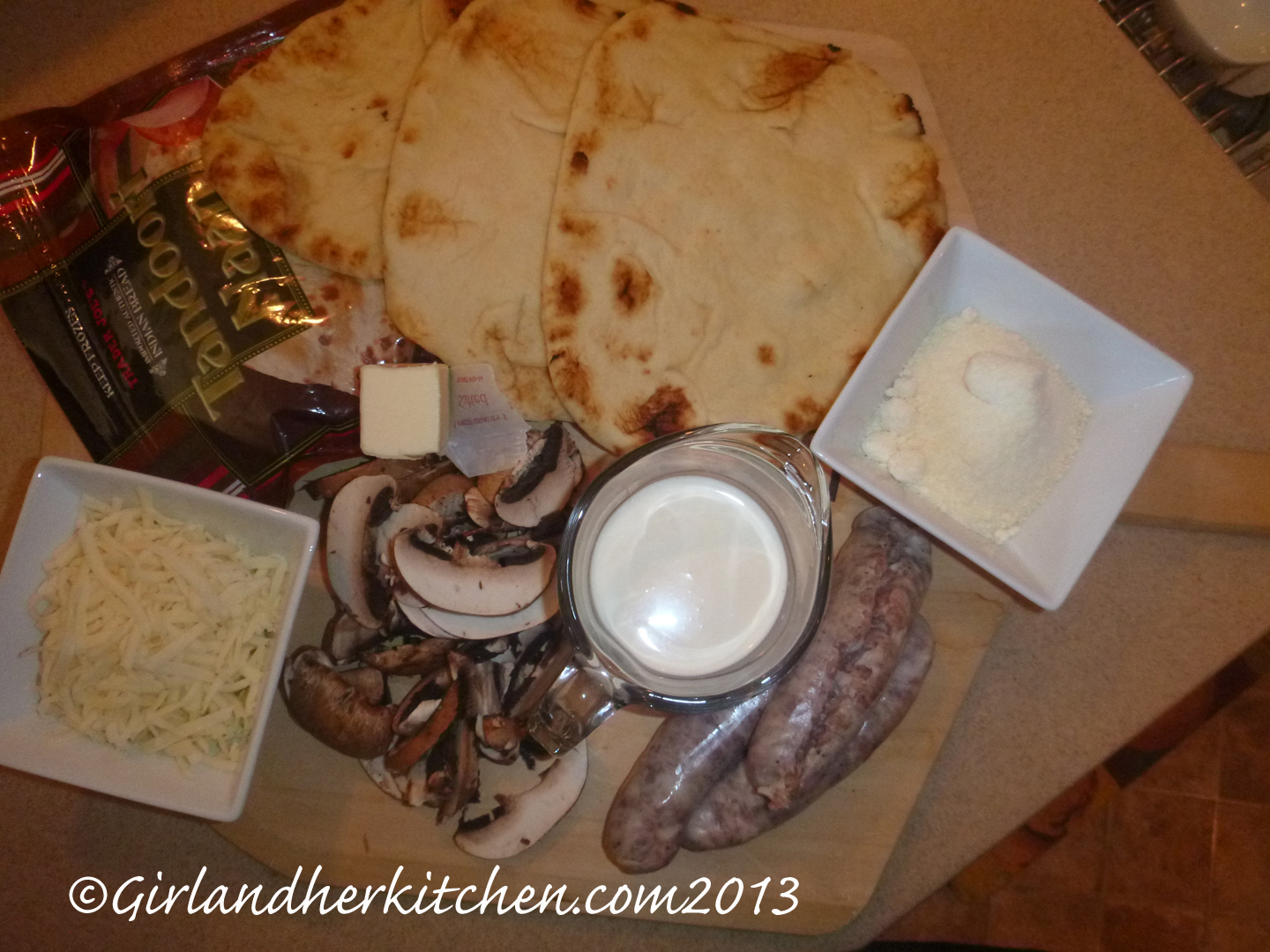
4 pieces of Naan bread
1 cup heavy cream
1/2 cup grated Parmesan cheese
4 tbs. butter
1 cup sliced crimini mushrooms, thinly sliced
2 to 3 Italian sausages, removed from skins
1/4 to 1/2 cup shredded mozzarella cheese

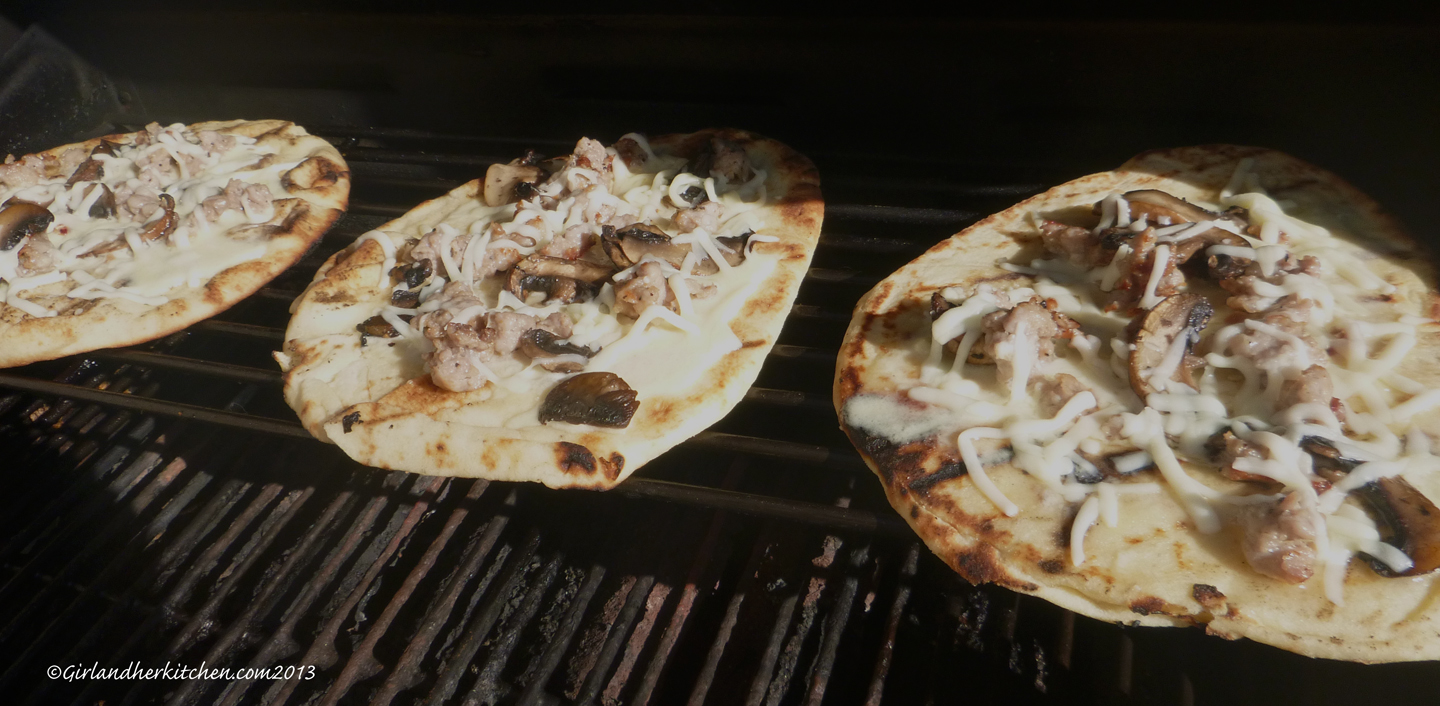
Toast the Naan bread on the grill over indirect heat (not over direct flames or the crust will burn) to get a crisp on it.  While they are toasting, fry the sausage and sliced mushrooms until the sausage is cooked through. The flavors of the sausage will richly enhance the flavors of the mushrooms.

In a pan, melt the butter, add in the heavy cream, and Parmesan. Simmer for about 5 minutes, but do not boil.

Place Naan breads on a foil-lined baking sheet. Place some of the heavy cream/cheese sauce on each of the Naan breads. Top with the sausage and mushroom mixture. Cover top with shredded mozzarella.

Place back on the grill and close it. Heat until mozzarella is melted and bubbly. Slice into quarters and eat. It’s a hardy lunch for 4 to 6  or, with the addition of a salad can be a light summer dinner for 6 to 8.

If you would like to try this in the oven, just toast the Naan in the oven until crispy, add your toppings, and finish it under the broiler to melt the cheese.

This is a quick, delicious, and simple way to enjoy pizza at home, at the campsite, or it’s easy enough to make ahead and travel with. It reheats really well and still tastes amazing the next day–cold or reheated. Please try it. I know you will love it.


Heather

Leave a Comment

Salads and Dressings

Ten Layer Salad

Do you remember the seven layer salad that was so popular many years ago? When I was a kid, my mom brought that to almost every family gathering. Until her famous pasta salad made an appearance, then the seven layer salad seemed to disappear…forever.
Well, the other day I was having a bit of nostalgia about the Seven Layer Salad so I decided to give it a go. It was the fourth of July and I figured that was perfect. I can remember enjoying it at so many barbecues, family reunions and parties when I was young.
My only problem was the layers. I don’t like to be told what to do. If I want more than seven layers, I should be able to have more than seven layers.
I began layering, and it was hard to stop. I went a little over, but it is okay. It is the seven layer salad for the new millennium! I was also a little surprised that the dressing was not counted as a layer in the old version. The dressing makes the salad! It is counted in my book.
A few updates, and I was there. Tasting it was like going back in time. The crunchy veggies, the smoky bacon, the creamy dressing. It brought back so many great memories and my kids loved it! I think this ten layer salad is the new seven.

Ten Layer Salad–makes 1 really big salad! Adapt for a smaller crowd.

3 cups romaine lettuce, torn into small pieces
3 cups baby spinach
2 cups cucumber, sliced and quartered
2 cups mixed color cherry tomatoes, cut in half
4 hard boiled eggs, sliced
8 strips of bacon, cooked and crumbled
5 green onions, sliced thin
2 cups frozen green peas, thawed
1 1/2 cups sharp cheddar cheese, shredded
1 cup homemade buttermilk ranch dressing, prepared, or more to taste based on your preference (you can use the hidden valley mix or this one is my favorite!)
Salt and pepper (I like lightly salting and peppering each layer)

Make sure all layers are prepared (torn, cut, dressing made, bacon cooked, cheese shredded, eggs boiled, peeled and cooled, peas thawed). Once you have all of the layers ready, begin layering in a clear glass bowl or trifle bowl.
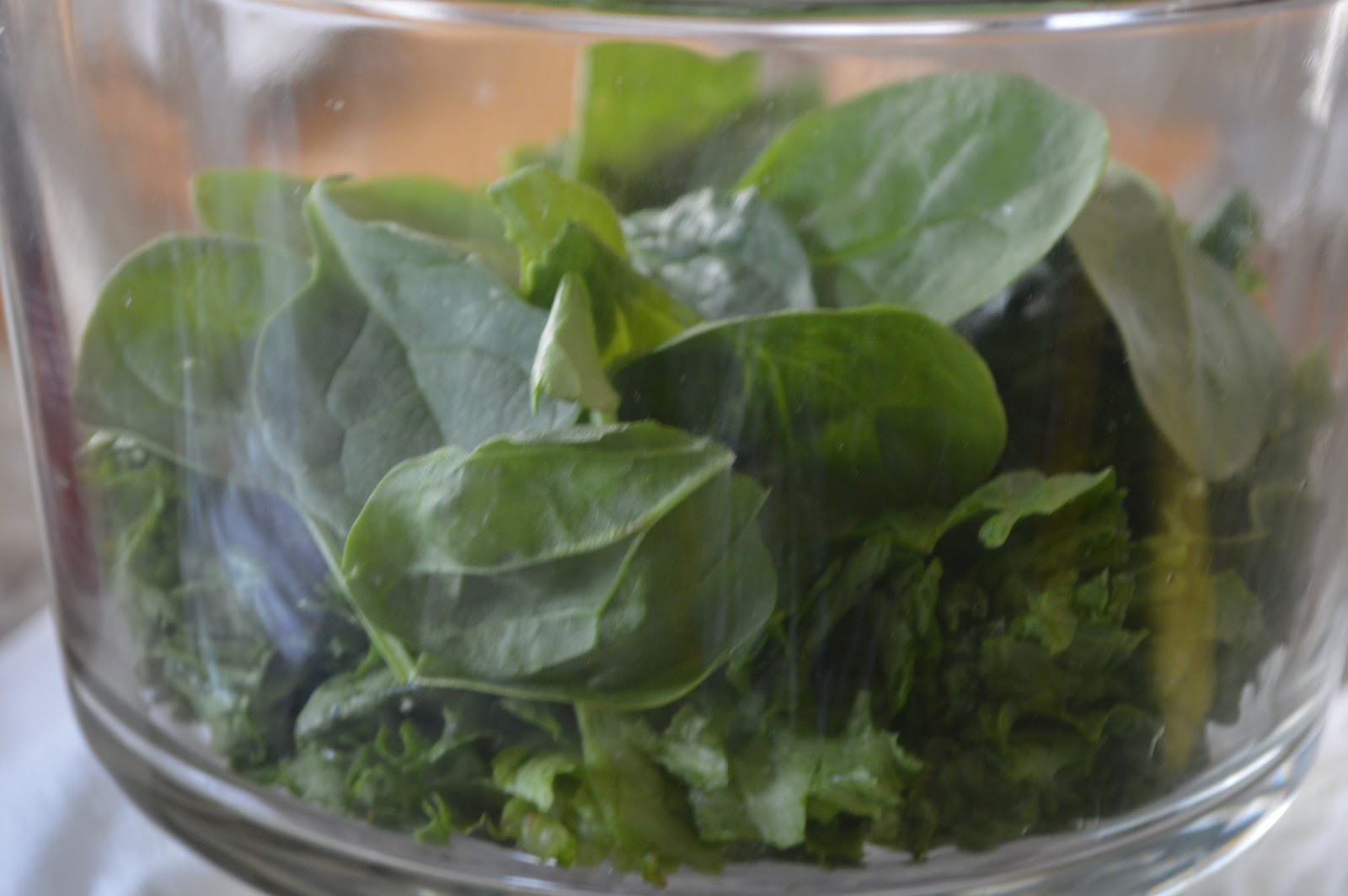
Start with the lettuce, and then layer on the spinach.

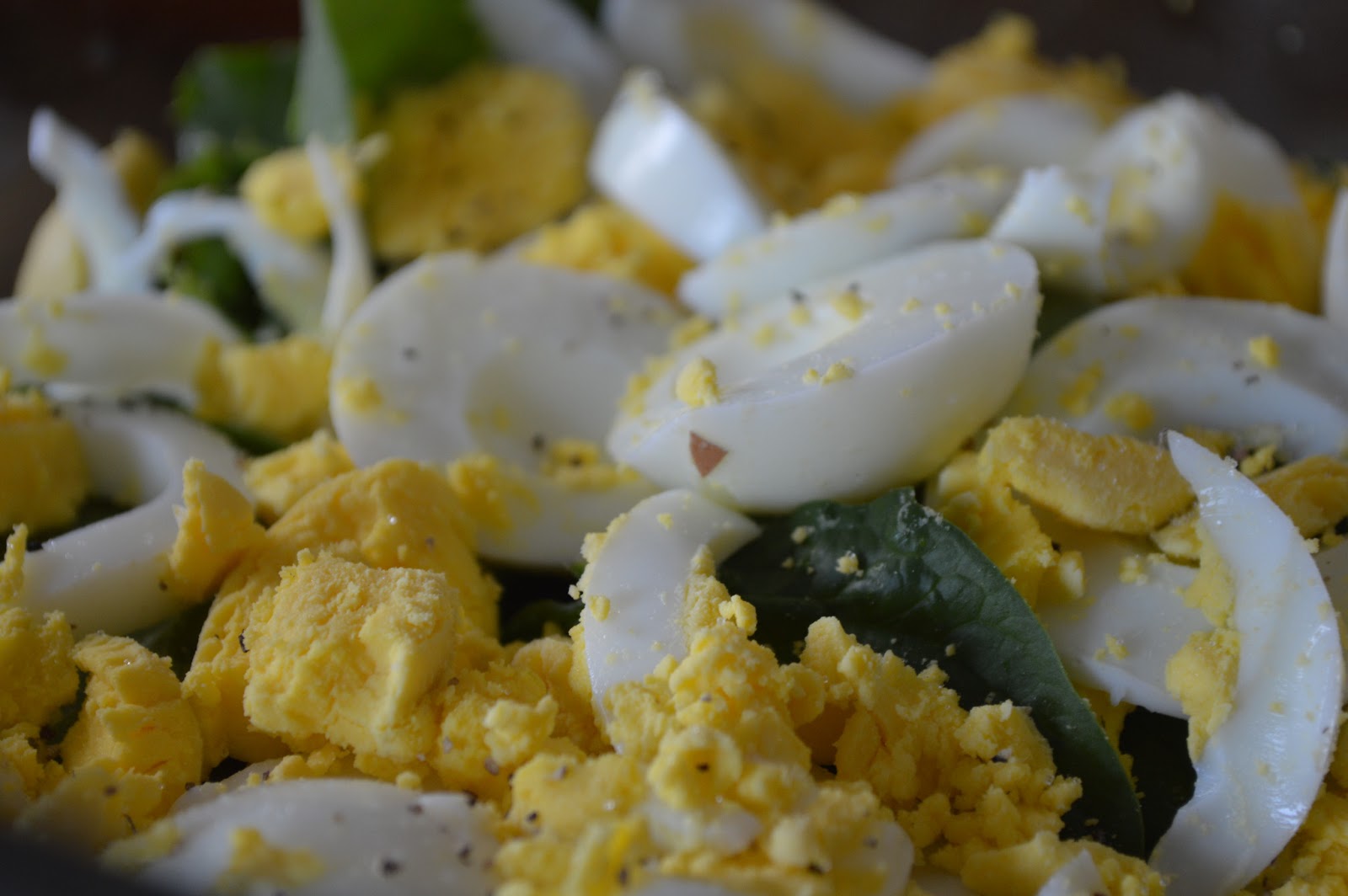
Continue with the cucumber, making sure to evenly layer over the spinach, and then cover with the sliced and crumbled hard boiled eggs.

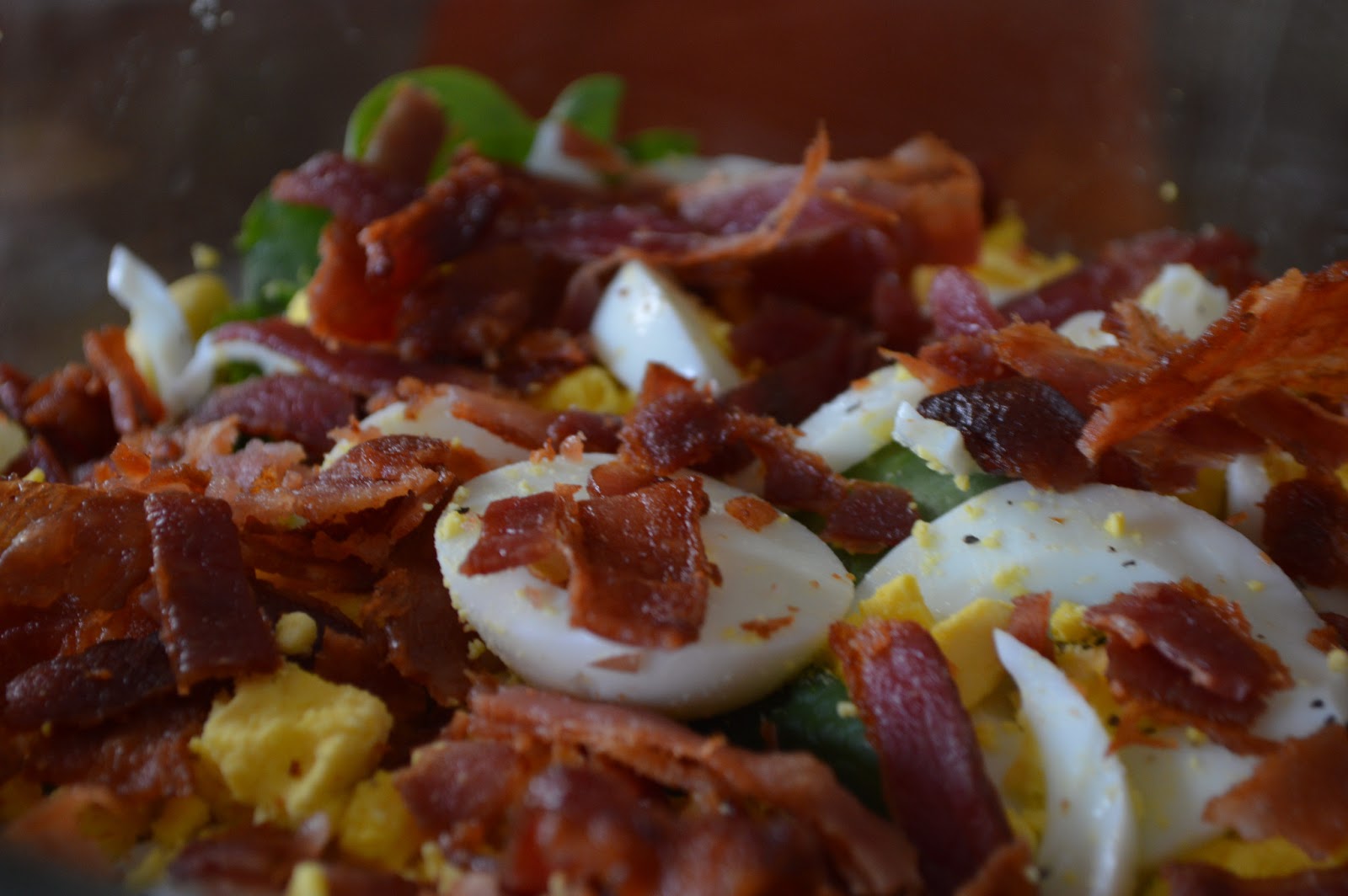
Sprinkle bacon crumbles over the egg.
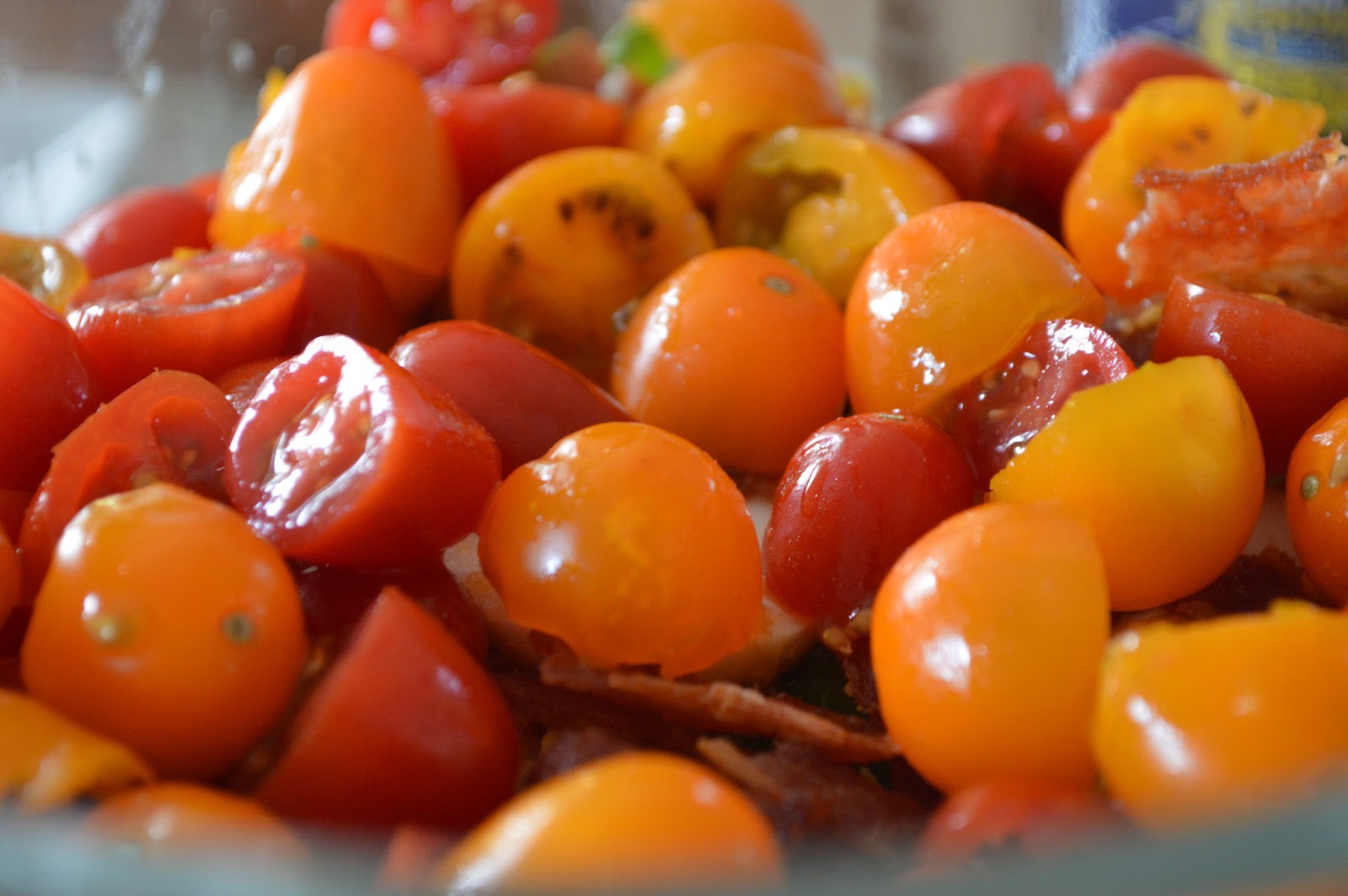
Top with tomatoes.

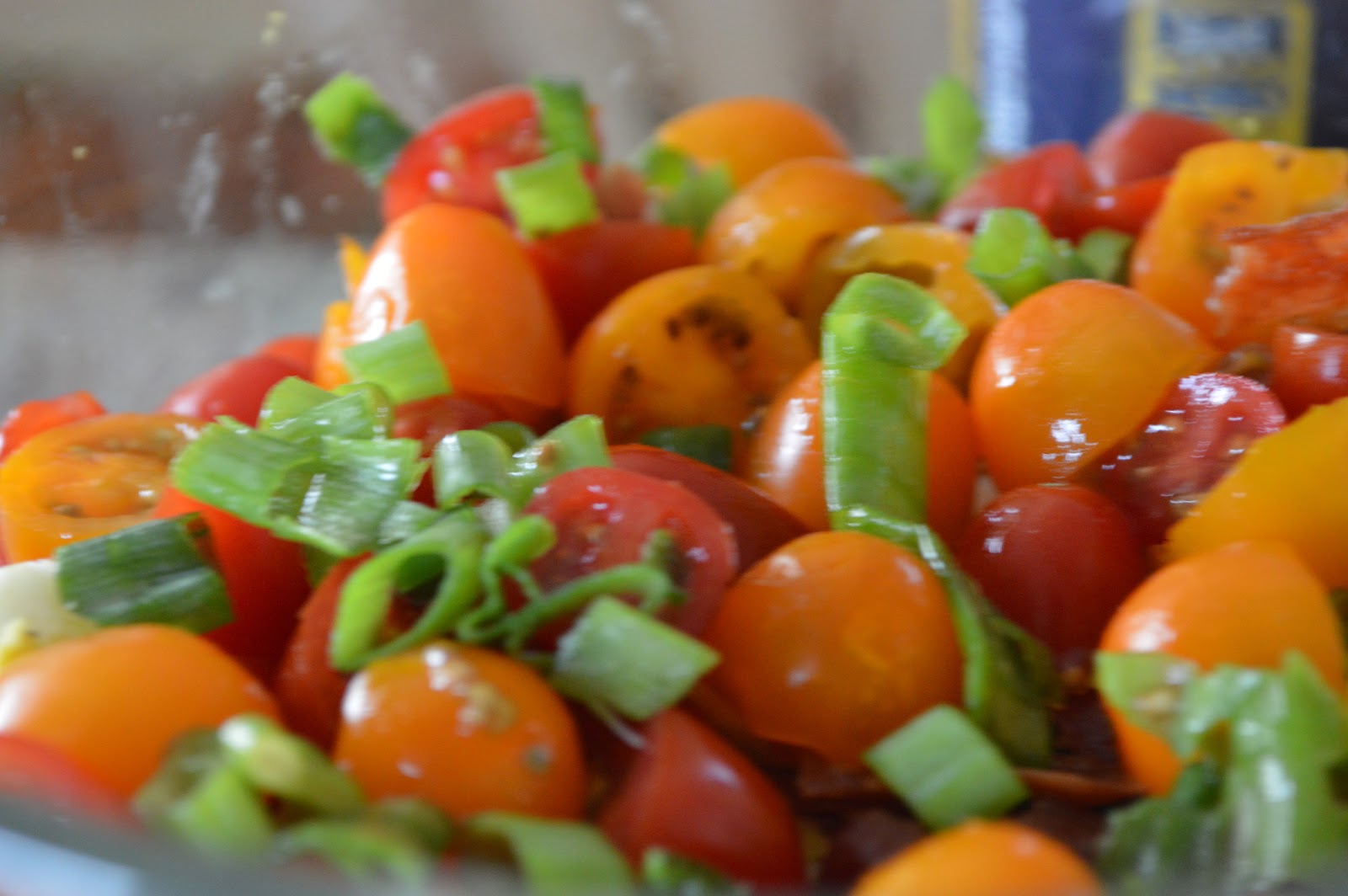
Sprinkle on green onions (I didn’t use very much because of the kids. I knew if they spotted a green onion, it might be all over, so I made sure not to over do it, without sacrificing the flavor!).

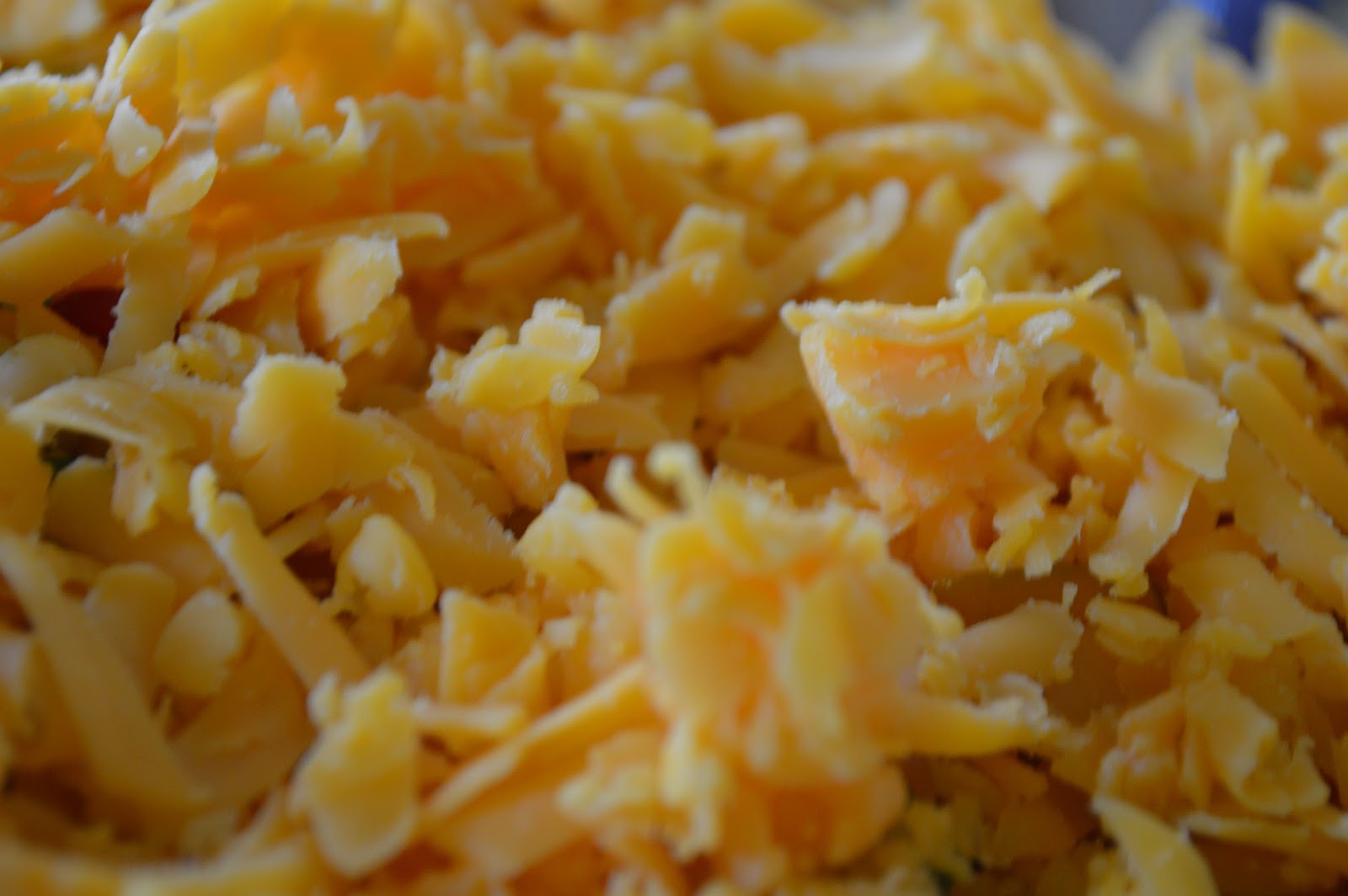
The cheese comes next. Be generous. Who doesn’t love a lot of cheese? And yes, I do highly recommend shredding it yourself. The flavor is crazy better than the pre-shredded kind in the bag. Honest.

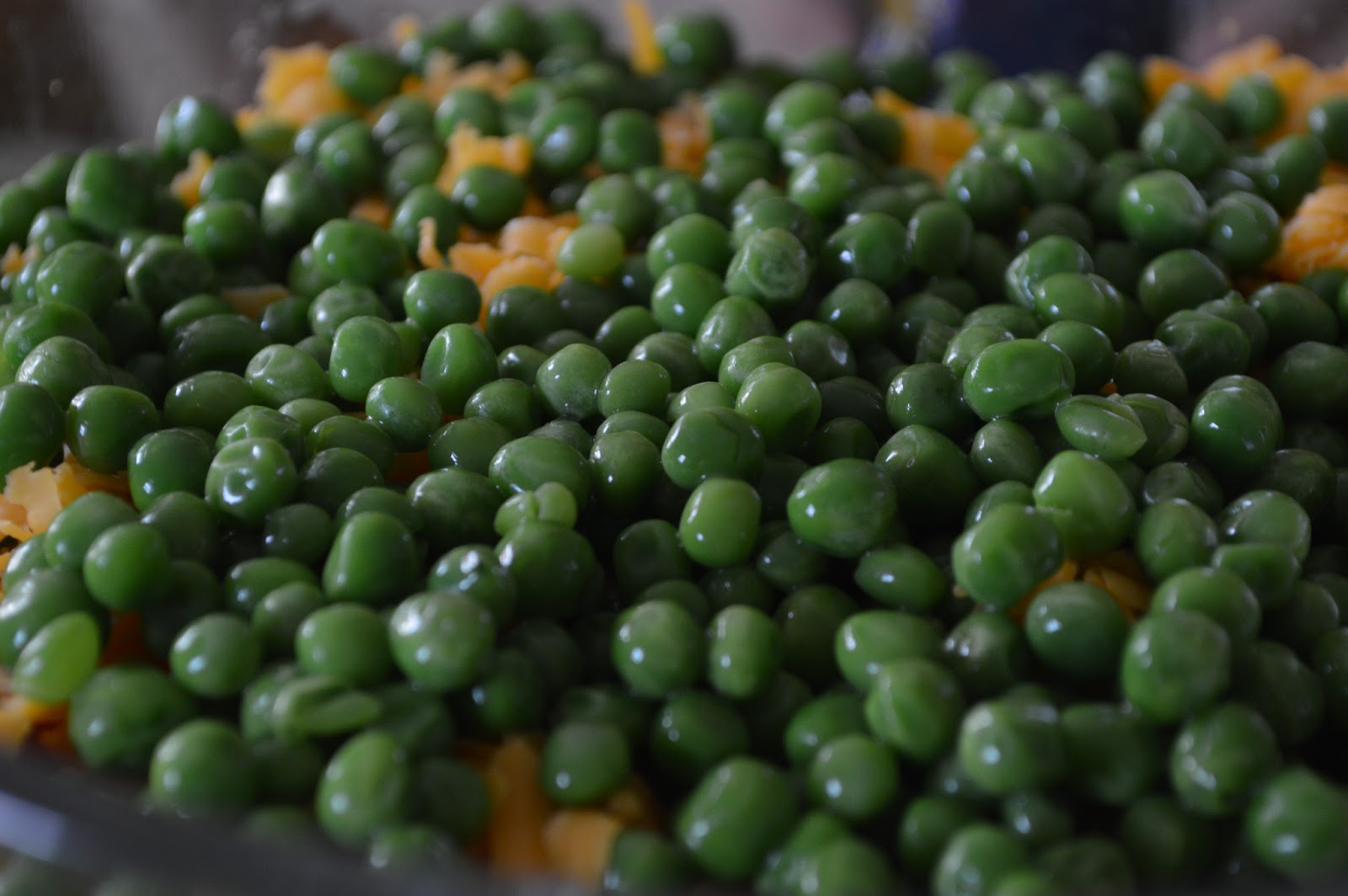
Finally, let’s layer the peas…
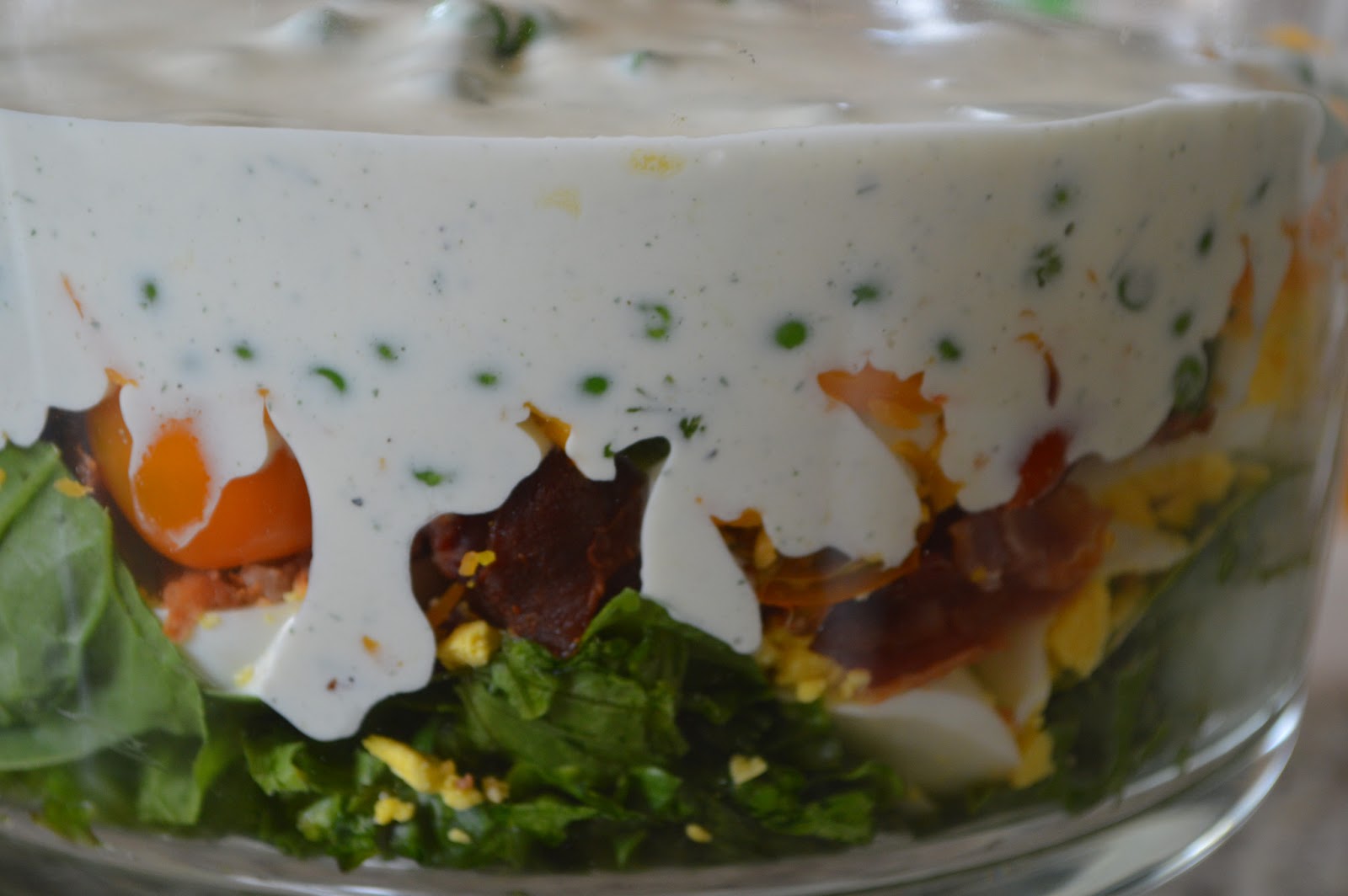
…and finally the dressing.

Show your guests, toss, and serve immediately. 
This is sure to be a hit!

Heather

Leave a Comment

Appetizers Pasta

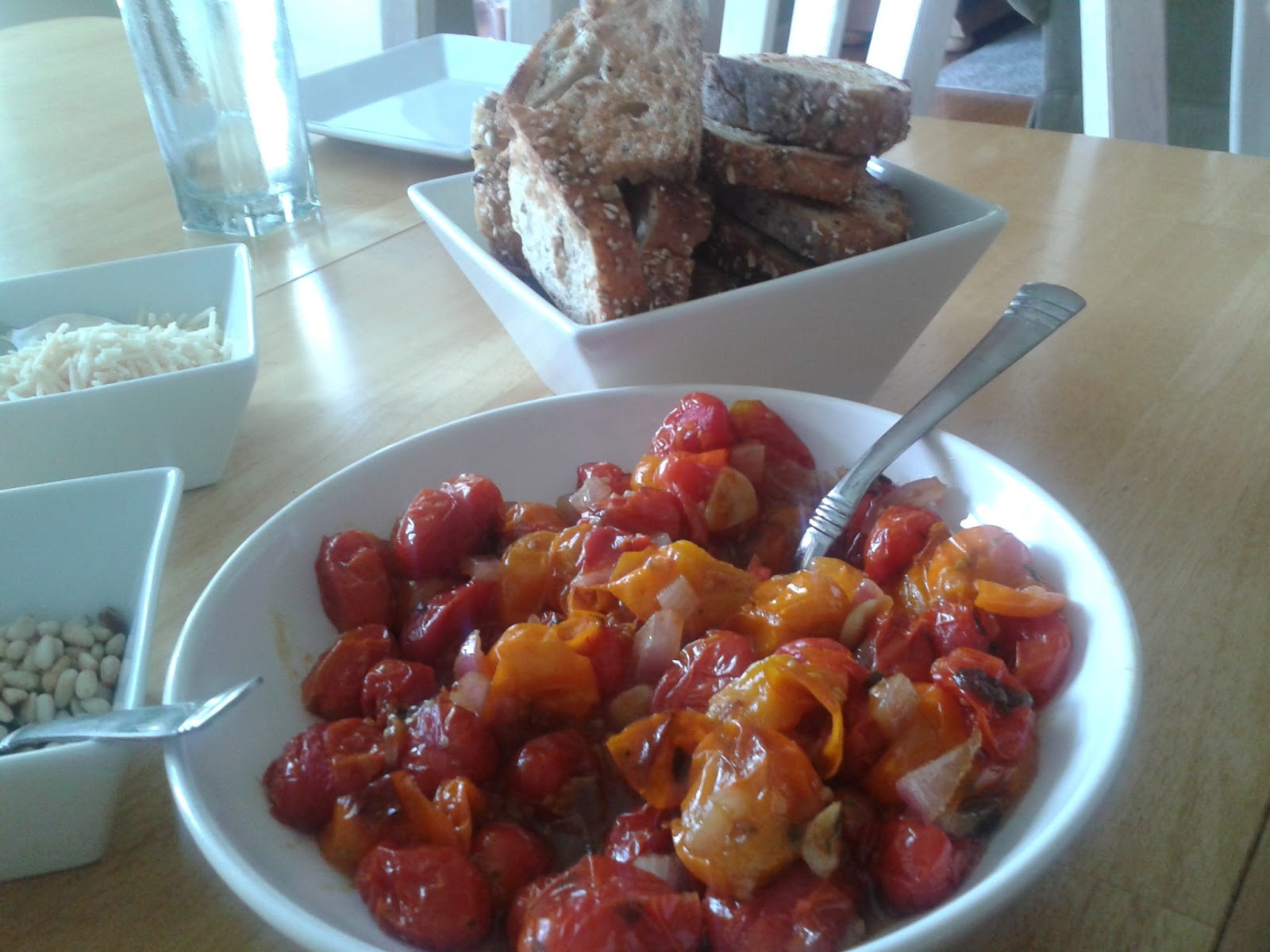
Roasted Tomatoes with Sage

Ok, so I am totally doing this.
It is indeed July, and I, being who I am, have turned on my oven.
I am roasting something. Seriously. Roasting something in July.
I am just so backwards when it comes to following seasonal cooking rules.
This sauce is so worth it. It is worth smoking out my kids and husband from the house and into the yard with their cries on how hot the house was with the oven on. It was worth every minute.
You may recall my love of tomatoes {and cheese}. This savory, delicious sauce fits right in there.
It is a simple dish… so that kinda makes it perfect for summer…right?
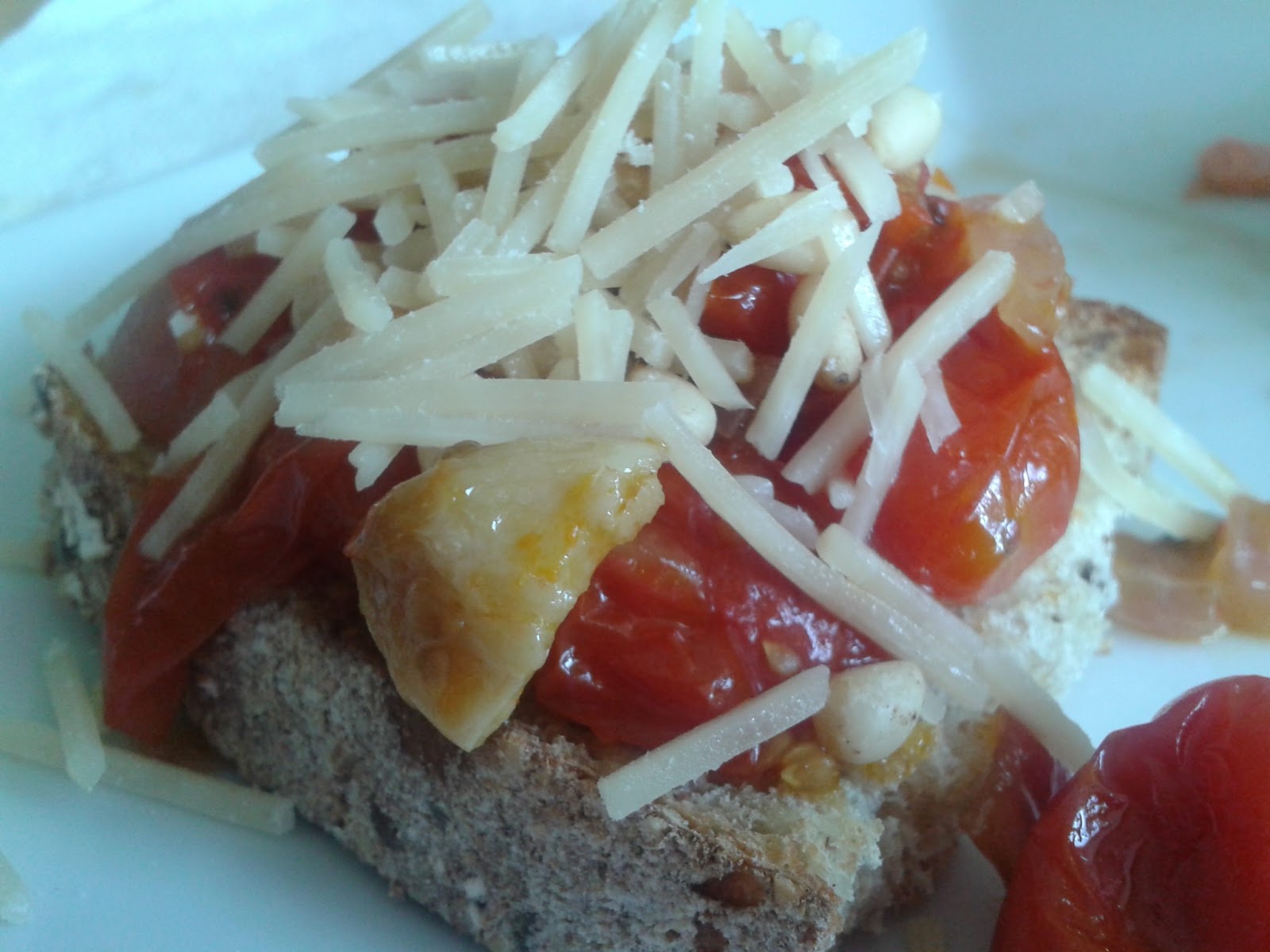
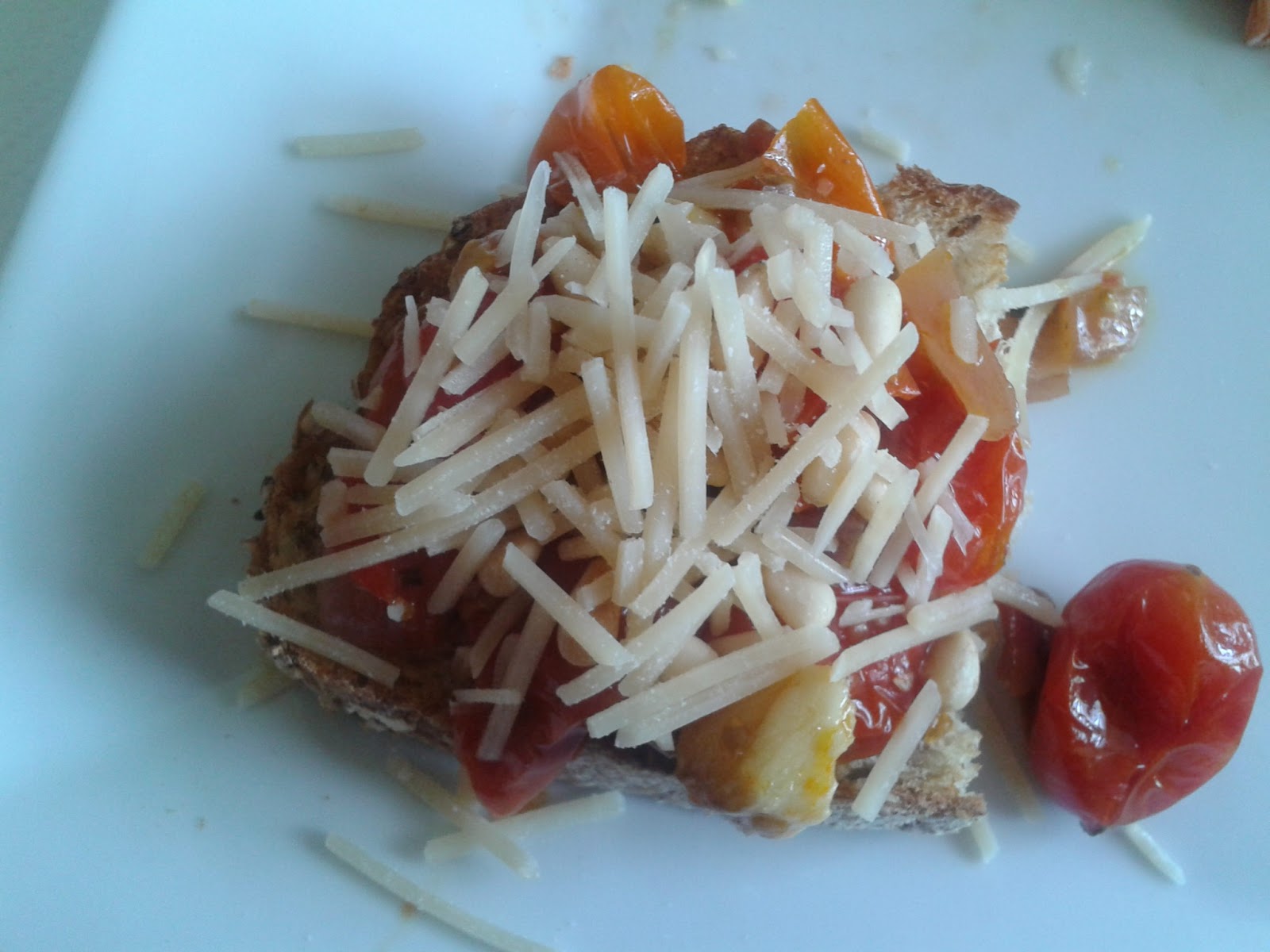
The thing I loved about this sauce the most was how versatile it was. We used it to top crusty whole grain bread along side our grilled salmon. It could also be used as a flavorful sauce tossed with pasta, a perfect mix with some roasted potatoes or even a topping to some creamy scrambled eggs. If you make these once, warn the family. You may be turning on the oven a lot this summer.

Roasted Tomatoes with Sage

4 cups cherry tomatoes (I like using a mix of colors)
1/2 cup red onion, very thinly sliced
3 tblsp chopped fresh sage
4 garlic cloves, thinly sliced
3 tbslp olive oil, divided
1 tablespoon red wine vinegar
1 tsp salt
1/2 tsp fresh ground pepper

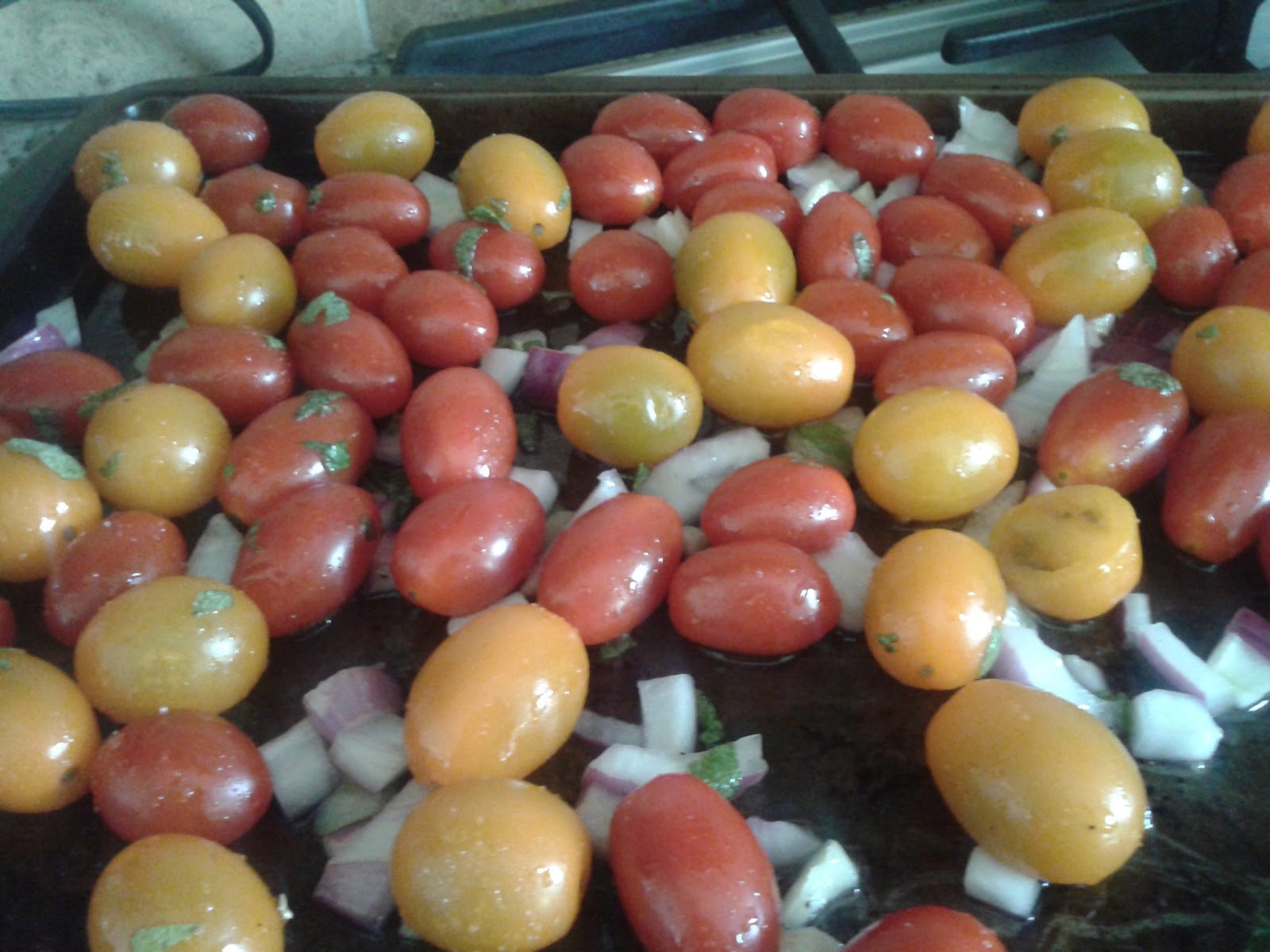
Preheat oven to 450 degrees. Combine tomatoes, onion, sage, and garlic in a l3x9 roasting pan. In a small bowl, combine 1/1/2 tbslp olive oil, red wine vinegar, salt and pepper and whisk together. Drizzle over  tomato mixture and toss to combine. Roast about 15 to 20 minutes, stirring once about halfway through the cooking process. Remove from oven and stir, lightly mashing the tomatoes. Drizzle remaining olive oil over the top. Serve warm over pasta, potatoes or eggs, or use as a topping for crusty bread.

Top with parmesan, toasted pine nuts or more sage for an extra flavor punch.


Heather

Leave a Comment

Chicken & Turkey Seafood Tips & Techniques

Grilling Tips Part 3

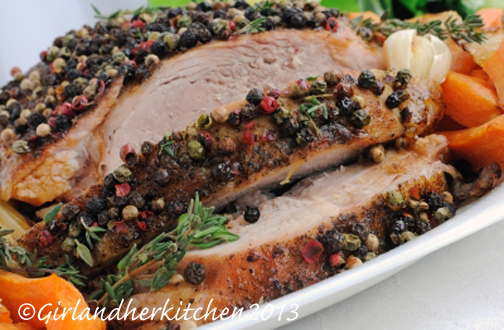
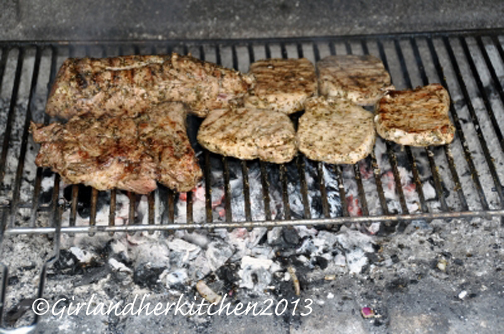
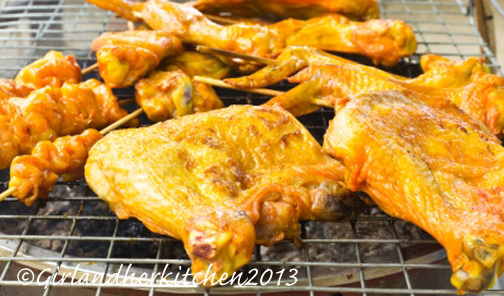
Today, we’ll be talking about preparing chicken, pork, and fish on the grill. Let’s start with pork. Referred to as, “the other white meat,” it often gets relegated to the periphery of the meat hierarchy. I think that’s a bit unfair. It is amazing roasted, breaded and fried, and especially on the grill. Pork also takes to sauces with great gusto and brings new life to old dishes.

Due to changes in the raising of pork over the last 30-40 years, it has become a lot leaner than it used to be. These changes have made pork a little more complex to cook. Less fat deposits on the various cuts makes for less moisture, which in turn, leads to a tougher piece of grilled meat If cooked for too long over too high of a heat, you can be wrestling with shoe leather on your plate instead of a juicy, tasty piece of meat. (This is a good tip to remember whether cooking with the grill, stove, or oven.)

Pork also has to be cooked fully. I recommend that you cook it to an internal temperature of about 155 degrees for lean cuts like loins, chops, and tenderloins and 165 degrees for for large cuts like shoulders and hams to ensure you’ve avoided that problem completely. (Bear in mind that meat continues to cook after you take it off the heat, so remove it a little before peak temperatures.)

As for cuts, and how best to grill them, here is a list from most tender to tougher portions and their grilling tips:

Loin: this includes loin roast, chops, center cut chops, tenderloin, back ribs, and country ribs. Loin chops, rib chops, and rack ribs should all be cooked at medium over direct heat. Baby backs, loin roasts, and tenderloins should be cooked at medium over indirect heat.

Leg: this includes ham and ham steaks. Since these are already cooked it is not going to be actually cooked on the grill but, reheated. This should be done over indirect heat and watched so as not to overcook it.

Belly: from the belly you get spareribs. These should be cooked at medium-low over indirect heat.

Shoulder: this is where you will get the butt roast and Country spareribs. For both, cook at medium-low over indirect heat.

Foreleg: this is where you will get the hocks. Cook these at medium over direct heat

* if you should choose to make a suckling pig (whole pig or piglet), it’s best if cooked at medium-low over indirect heat.

Now, let’s talk turkey … and chicken and other poultry. Chicken is a do-all, works-with-almost-any-recipe, versatile meat. It’s always ready to jump in and do its best wherever you decide to use it, making it a must for the grill.

Unlike beef, all chicken is graded for quality. The good news is that almost all the poultry sold in the United States is graded A. This is an indication that the bird is free of defects, rounded, heavy muscled, and has a layer of fat under the skin.

Poultry is classified by species (chicken, turkey, duck…) so that is how I will list them for you.

Chicken: Cornish game hens, broiler/fryer, and roaster.

Cornish game hens: should be cooked at medium over indirect heat if whole and at medium over direct heat for split birds.

Broiler/ fryer: should be cooked at medium over indirect heat whether split or whole. For pieces, I recommend medium over direct heat.

Roaster: Whole or split bird should be cooked at medium over indirect heat; pieces should be cooked at medium over direct heat.

Turkey: Fryer/roaster, young (less than 6 months), yearling (less than 15 months), and mature hen or Tom (more than 15 months).

Fryer roaster: this should be cooked at medium over indirect heat.

Young: this should be cooked at medium over indirect heat.

Yearling: This should be cooked at medium over indirect heat.

Mature hen or Tom: this should be cooked at medium-low over indirect heat.

Duck: Duckling (less than 8 weeks) and roaster

Duckling: the whole or split duckling should be cooked at medium over indirect heat. Pieces should be cooked at medium over direct heat.

Roaster: Whole or split should be cooked at medium over indirect heat. Pieces should be cooked at medium over direct heat.

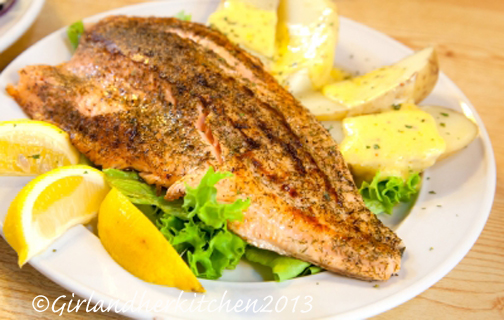
As for fish, rather than going into each and every kind available, I will offer you some helpful tips on what to look for when buying fish and the different ways it can be prepared.

It doesn’t matter what kind of fish you are looking for, there are a few key things every good piece of fish should have.

1. Fresh fish should have firm flesh. Don’t be afraid to give the fish a little poke. Choose the thickest part of the fish and give it a jab. The flesh should bounce back quickly. If it leaves a dent the flesh is beginning to deteriorate.

2. Lift the gill flaps at the back of the head. The interior gills should be spongy and bright red or pink. Brown or gray indicates it’s not fresh.

3. The eyes should be clear, clean, and bulge slightly. Sunken or cloudy eyes? Say your goodbyes.

4. The skin color should be bright and should have no blemishes or red patches under its surfaces.

5. Fresh fish has no odor at all. It may smell a bit like the ocean but that is all you should smell. A fishy odor indicates the fish is not fresh anymore. Smelling your fish is one of the most accurate ways of testing for freshness.

As far as preparation, here are a number of general ways to get your fish ready for the grill.

Whole dressed: This means the fish has been scaled, gutted, and gills removed. The head and tail stay attached. This style of fish is best prepared over indirect heat. This style is also great stuffed.

Pan dressed: This means the fish is scaled, gutted, and the head is removed. Cook over indirect heat.

Scored: The whole fish, whole or pan-dressed, is slashed along the sides to allow for the heat to permeate and cook faster.

Fillet: The term fillet does not mean that a piece of fish is necessarily boneless. What filleting refers to is that the meat is separated from the backbone and ribcage. If the fish remains connected at the back it is called a butterfly fillet. If it is cut along the back but remains attached at the stomach, ready for stuffing, it’s called a kited fillet.

Split: this term means the fish has been cut into two separated fillets.

Steak: This refers to a cross section of a round body fish that is scaled and gutted. A portion of the backbone remains to hold the meat together. If the steak is horseshoe shaped, it’s from the top of the body, close to the head and is called a center cut. If it’s more of an oval shape it’s cut from the tail or loin. The steak cut is great for grilling because it holds its shape and stays together.

There you have it. Everything you need to know to grill just about anything. So, if your grill, like mine, has been staring at you and mocking you for the foods you’ve burned or let slip through the grates, it’s time to get out there and take that grill on. No more living in fear. You are an informed and ready grilling pro. Now get out there and cook!

Heather

Leave a Comment

Desserts Fourth of July Ice Cream

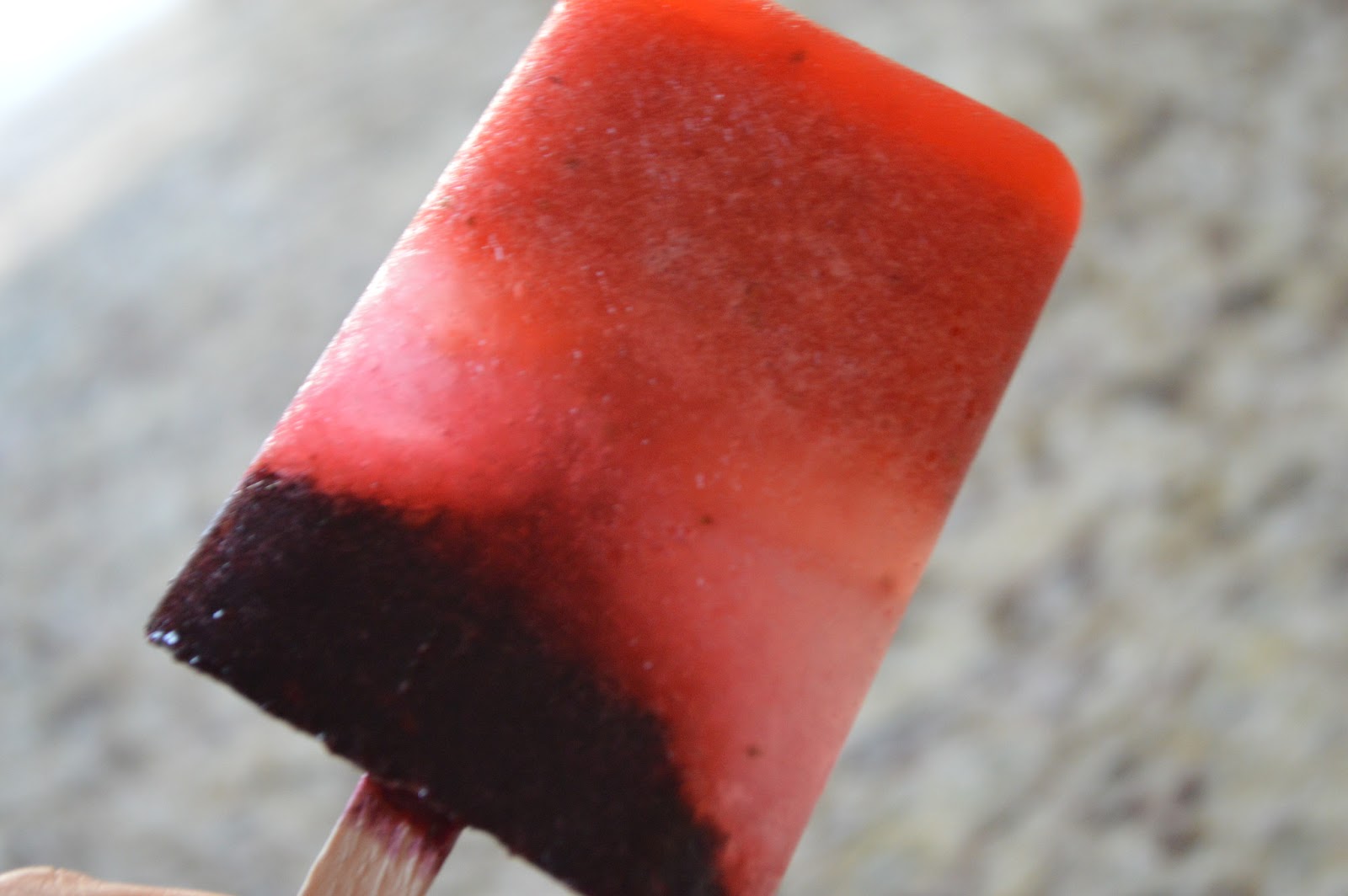
Happy 4th of July! Firecracker Popsicles…{Shhh…They are healthy!}

Firecracker popsicles.
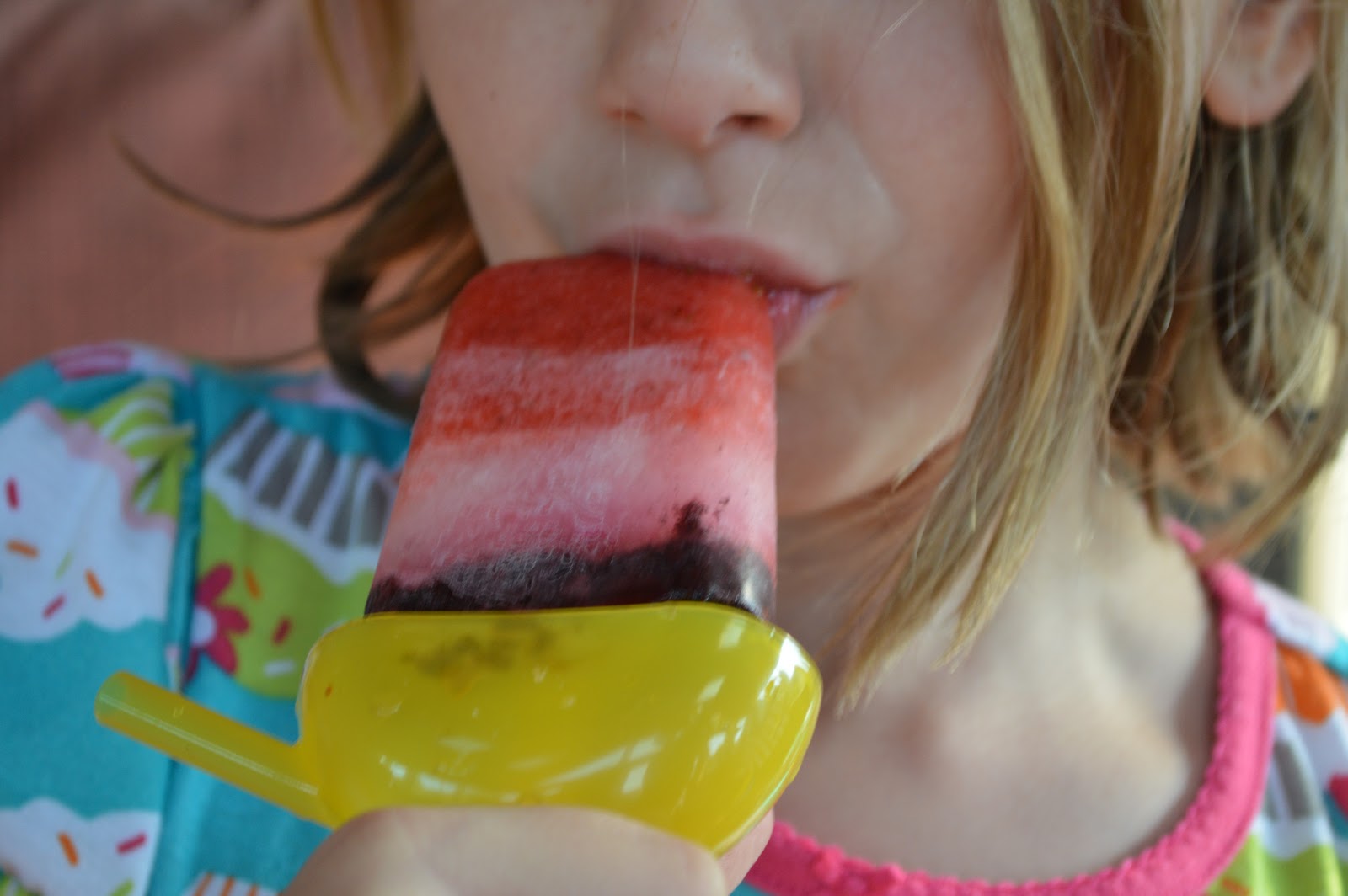
Don’t those just conjure up fourth of July memories for you? Drippy, sweet and almost too good to be true, those popsicles were the favorites of me and my brothers when we were kids. Usually, we were lucky enough to just get the solid colored popsicles. When my mom broke out the red, white and blues, we were beyond  thrilled.
Those were the days you didn’t even think about what was in your food. Remember those days? They seem like ages ago. .
It really is a downer you know.
I mean, it is too bad that blue raspberry wasn’t a real fruit. I mean, how wonderful would that be to pick bright blue, sweet, blue raspberries right off of a bush and make all sorts of delicious sweet treats with it?
But, unfortunately, reality sets in, and we have to accept that not only is blue raspberry not an actual fruit, it doesn’t even have any fruit in it at all…just a lot of high fructose corn syrup and blue food coloring.
But… it is the fourth of July (whining voice). We need those popsicles!
I just couldn’t give up the idea of a firecracker popsicle. I mean, I am sure my kids will have the original, sweet, artificially colored ones many times in their lives and that is okay. I was thinking though…we could make one that is delicious and sweet AND colored red white and blue BUT only has some good stuff in it.

It is possible right?
Yep!
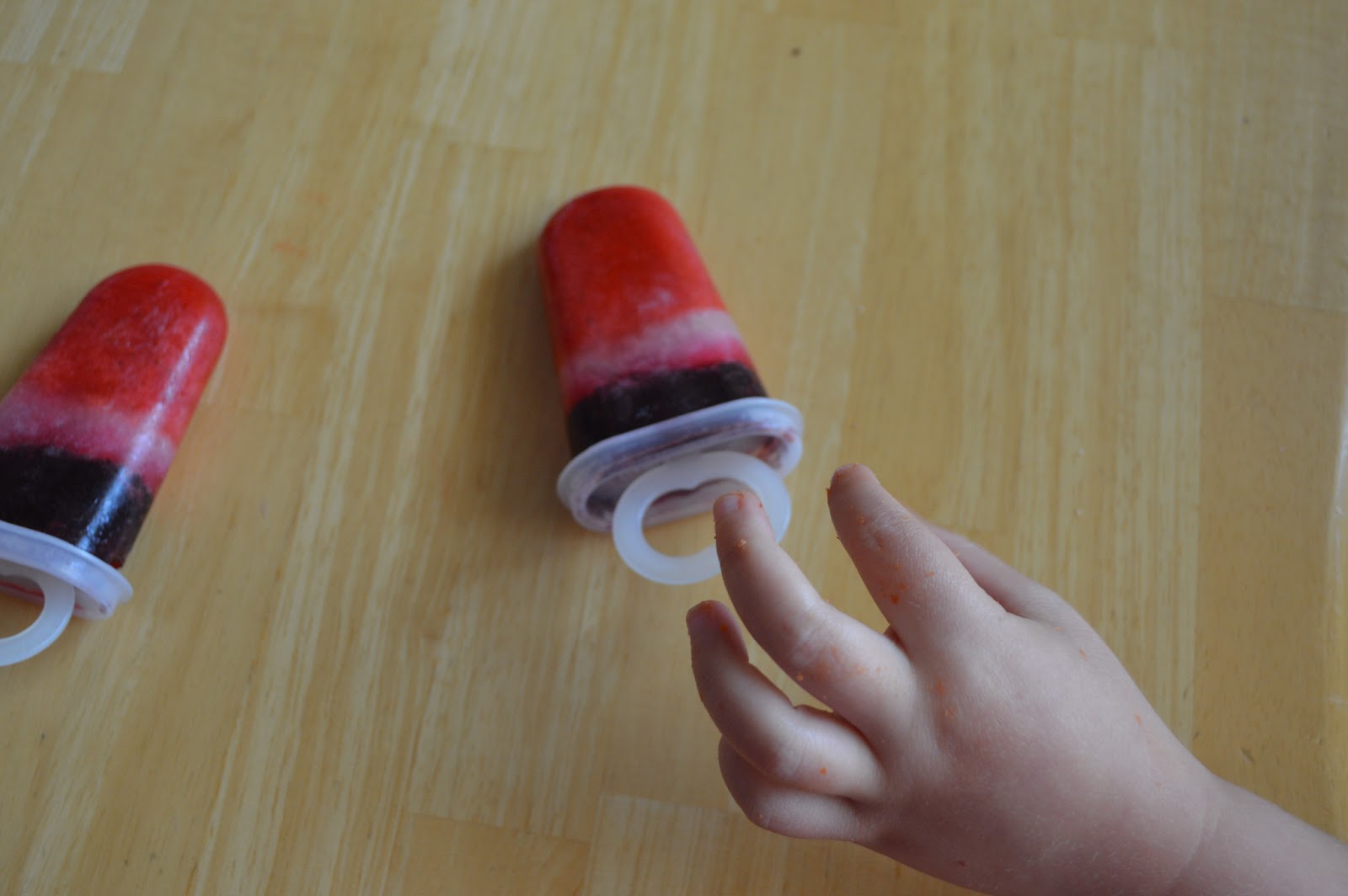
We did it and the result?
They were delicious.
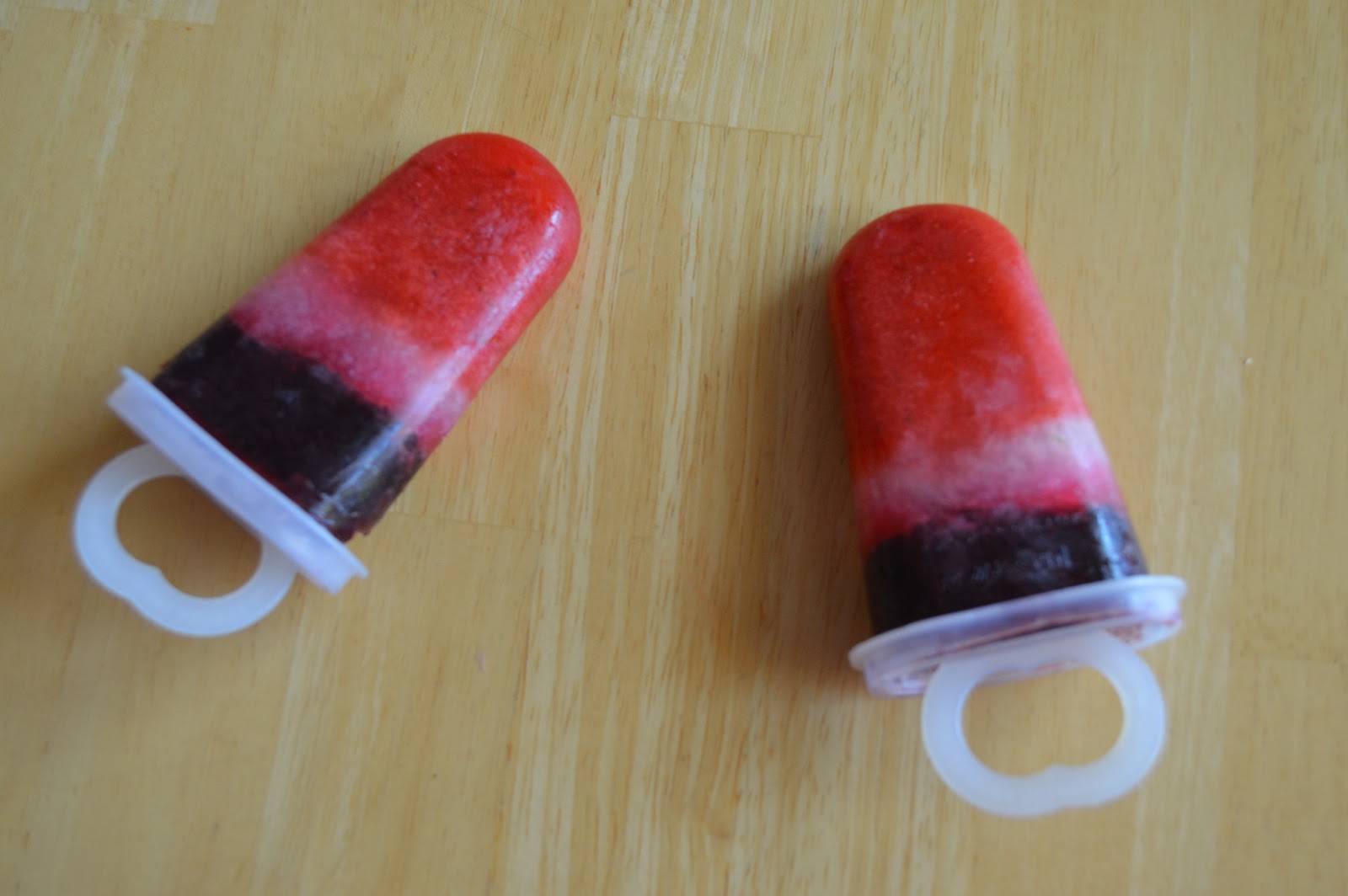
Whip up a batch of these and see the kids squeal in delight. They won’t miss that elusive blue raspberry for a second!
Have a great 4th of July with your friends and family!

Look at those little hands trying to grab these before I was even done taking the picture!

Firecracker Popsicles

Make sure you have everything ready to go. You have to act quickly for these to really work well!

You will need:

10 popsicle molds/Food processor or blender

Red Layer:
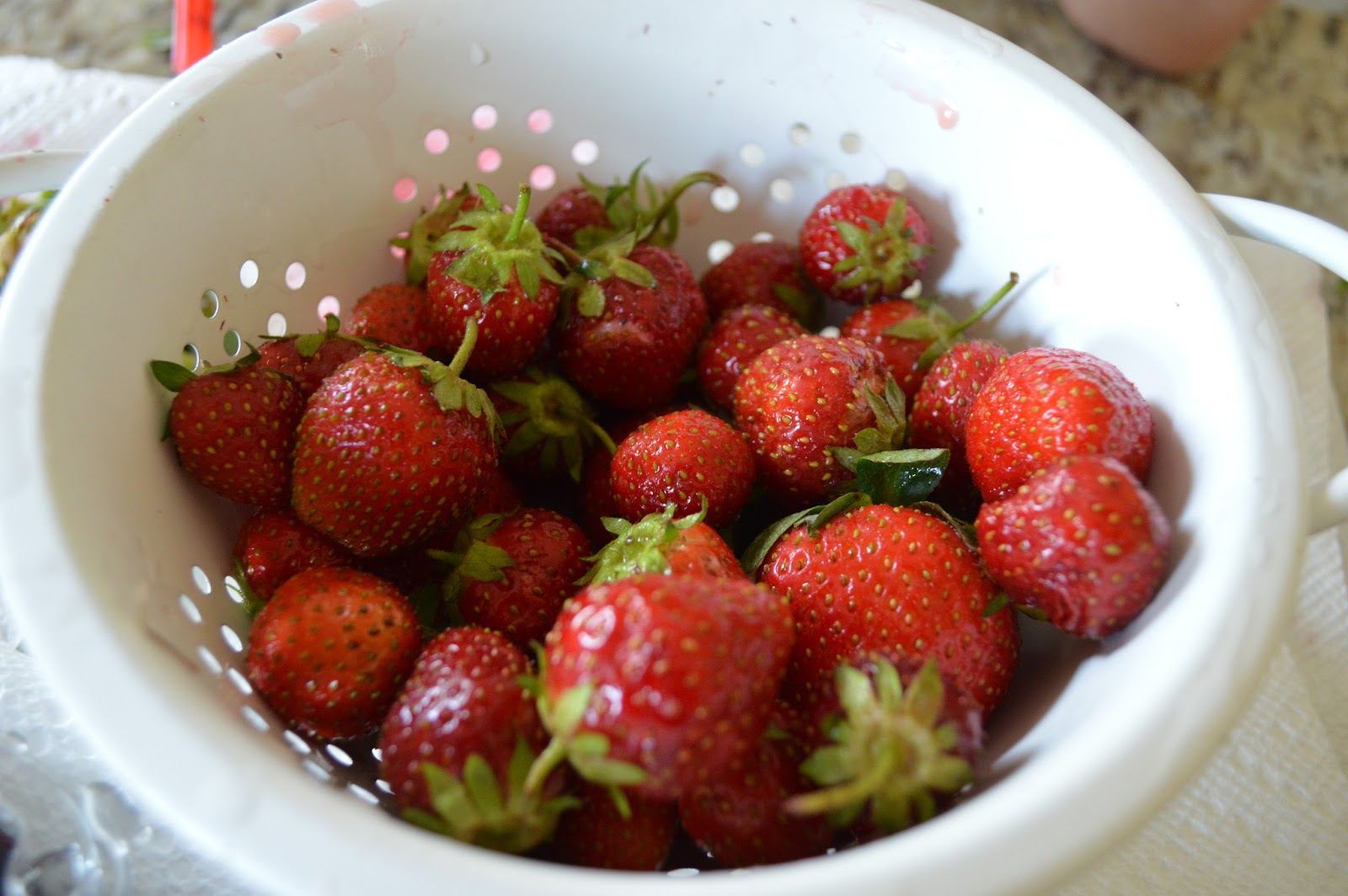
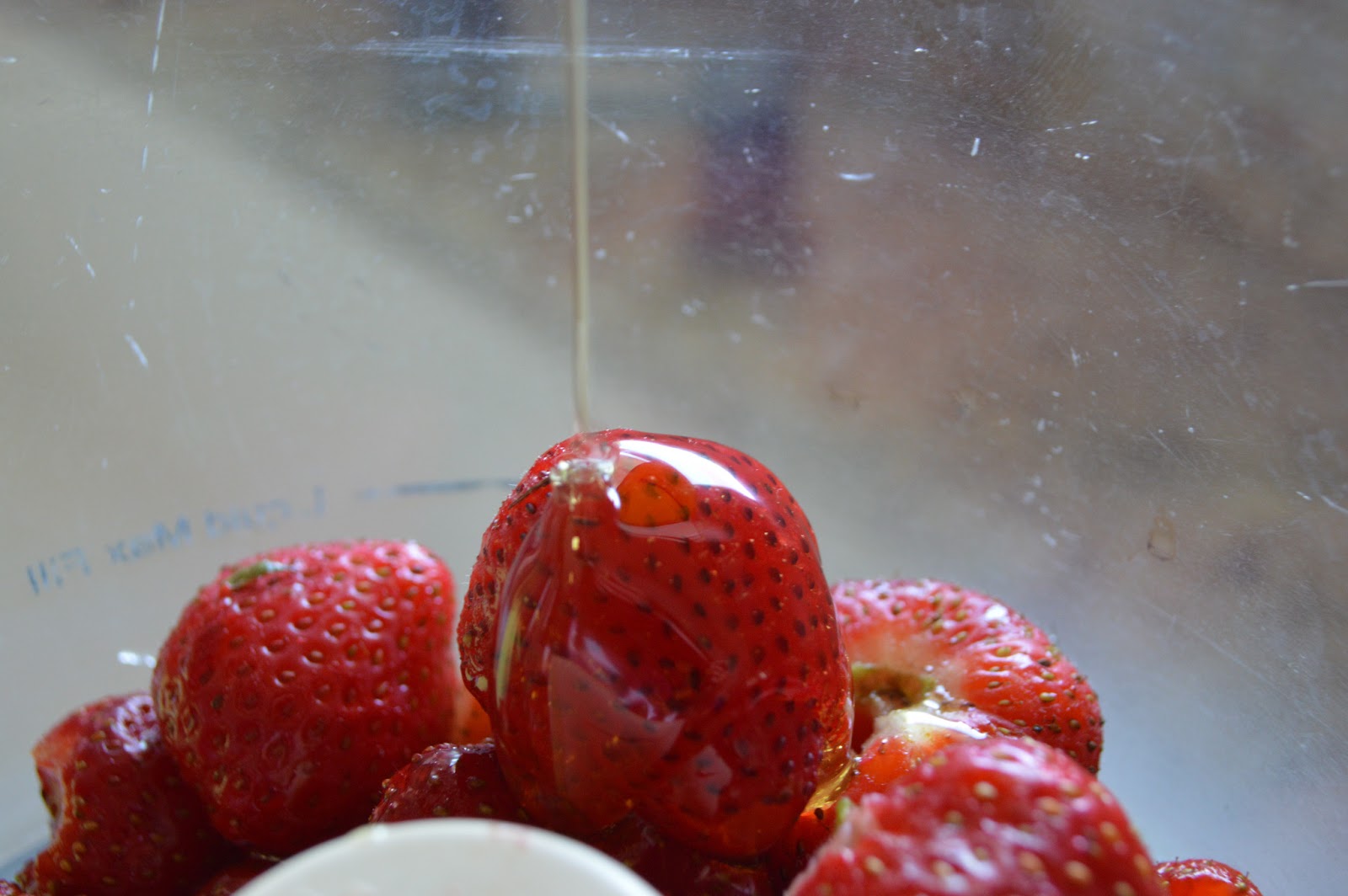
2 cups strawberries, washed, hulled, frozen
1 tblsp honey (more or less to taste if desired)
1/2 cup coconut water

White Layer:
1 lemon-juiced
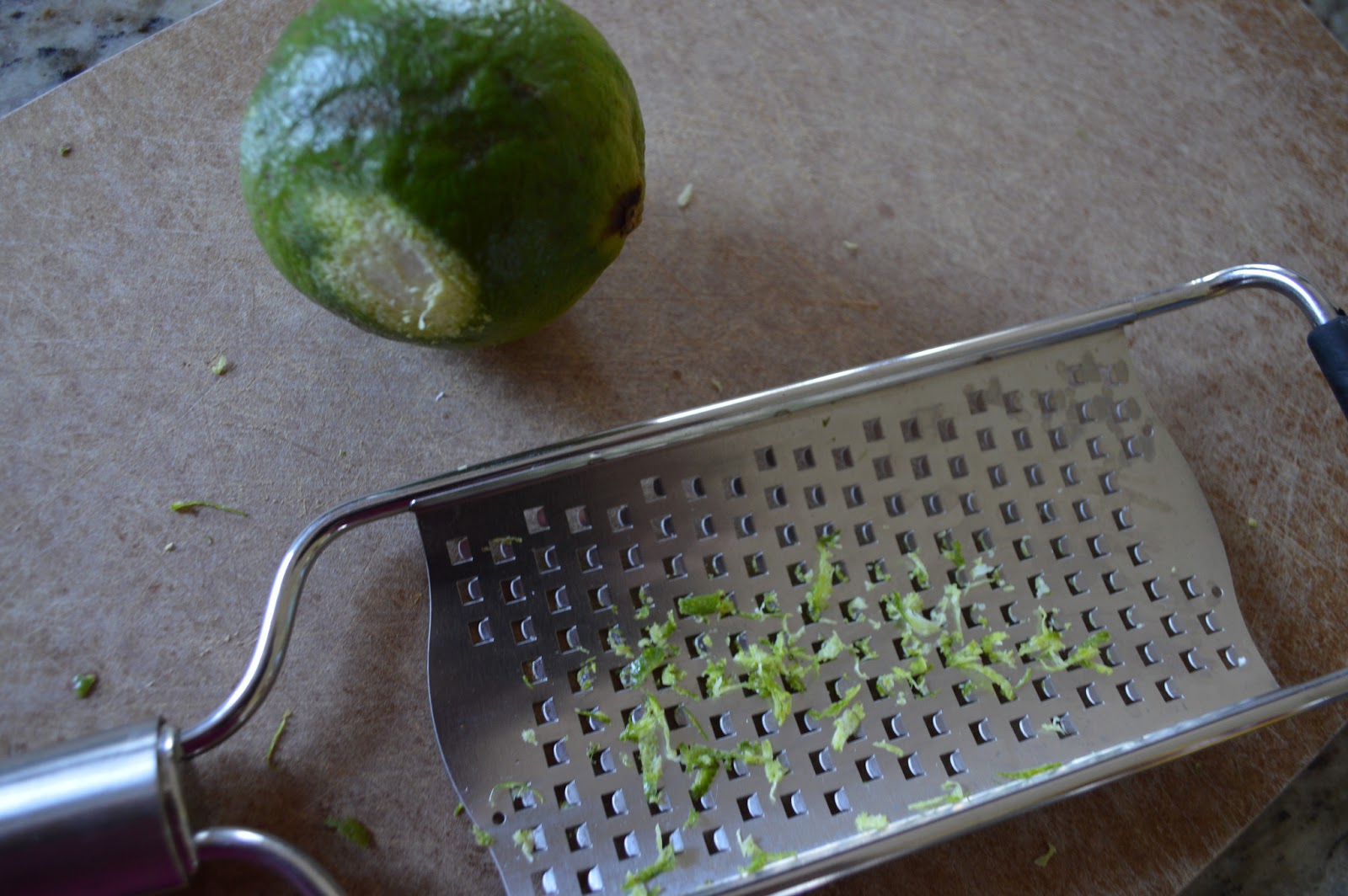
1 tsp lemon zest
1 lime-juiced
1 tsp lime zest
1 cup of cold water
1 cup of crushed ice
3 tblsp honey (more or less to taste if desired)

Blue Layer :
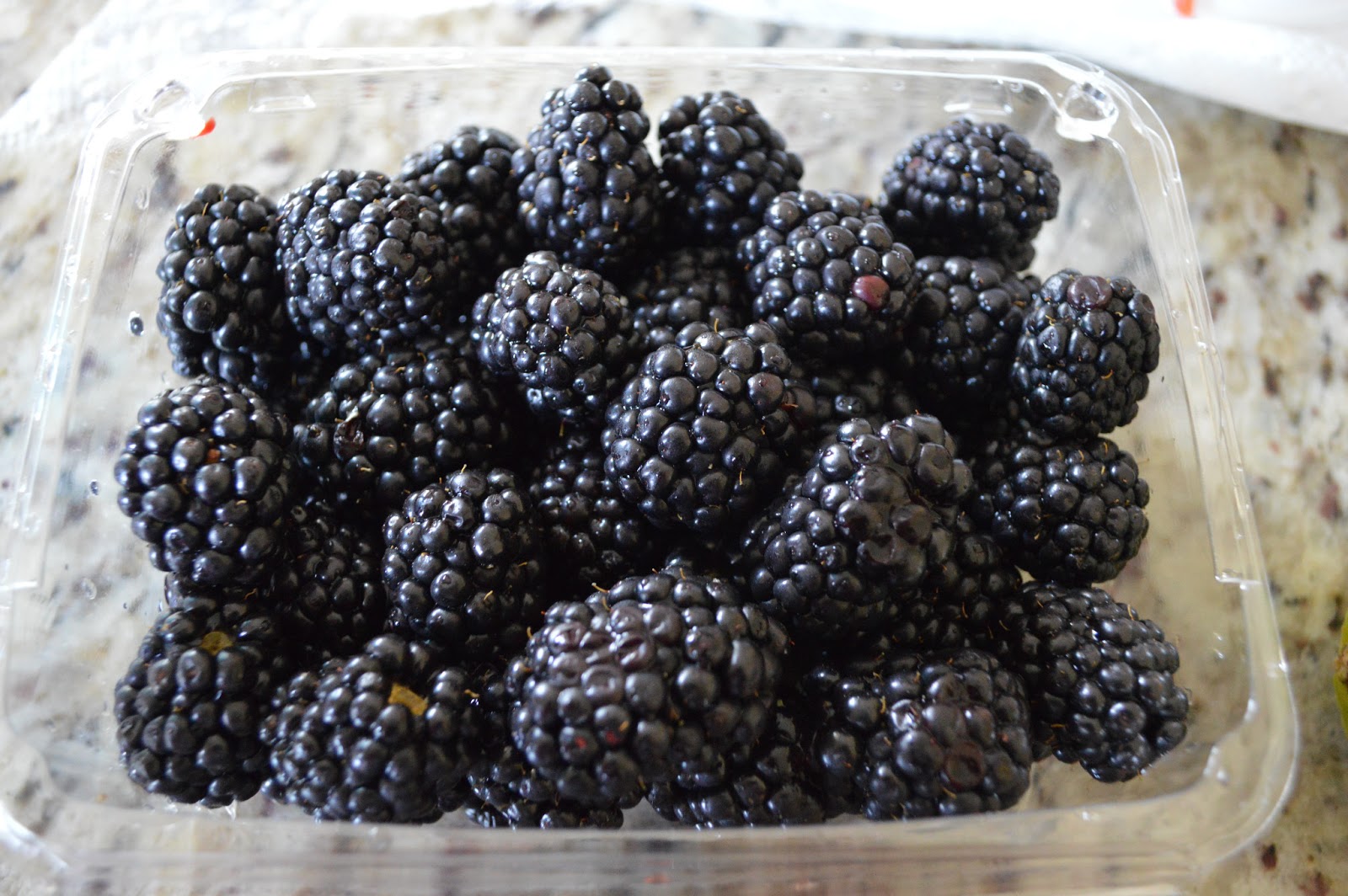
2 cups blackberries, washed, frozen
1/2 cup coconut water
1 tblsp honey (more or less to taste if desired)

Make sure berries are frozen before starting so the layers do not end up blending together. You need to move quickly so the different layers do not start melting!

In your food processor or blender, add ingredients slowly, and blend all the ingredients for the red layer until thick, smooth and frosty. Taste for sweetness and add more honey if necessary for your taste preference. Check consistency. It should be thick like a slushy. Pour an equal amount into each popsicle mold. Rinse food processor or blender. Repeat with white layer ingredients, adding a layer on top of the red, and then again with blue layer, adding a final layer. Place popsicle sticks into the layers and freeze immediately for at least four hours until solid. Enjoy on a hot (or a cold) day!


Heather

Leave a Comment

Beef

Grilling Tips, part 2

For the second part of my grilling tips series, let’s talk about beef. I know there are other meats that are amazing on the grill–and I will touch on those, too, but we’ll start with the cow.

To begin, here are some terms you may have heard. Some you may be familiar with and some may be new to you. So if you already know all of this, bear with me as I clarify some basics for those that don’t.

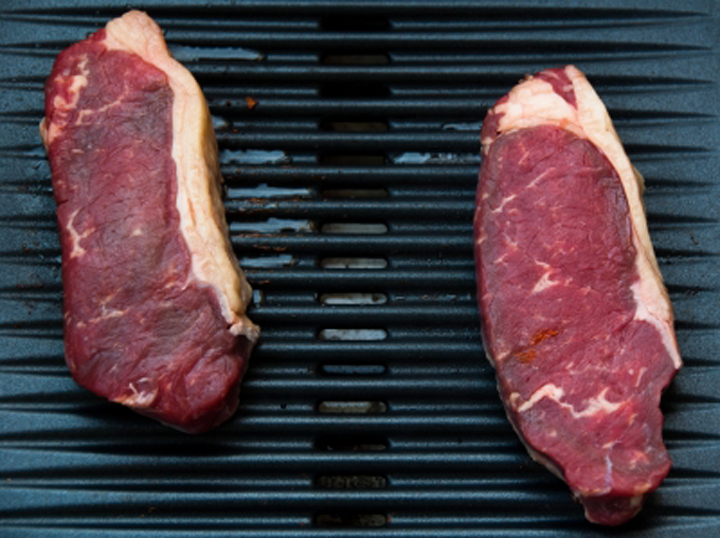
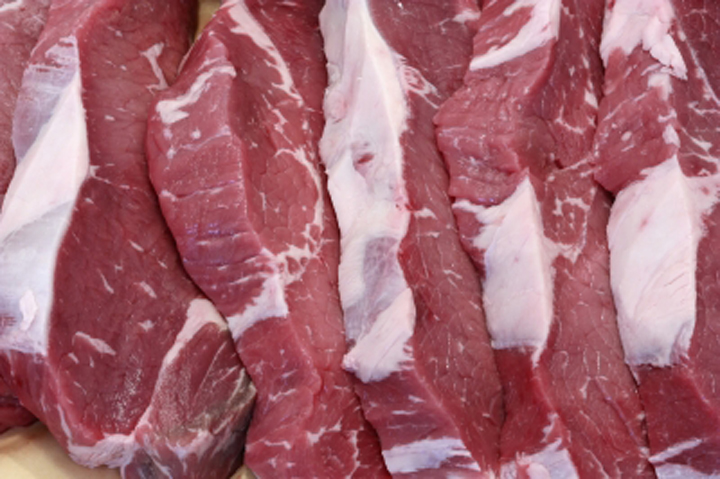
1. Marbling: This refers to the fat that is webbed throughout the main body of the cut of beef; not the fat on the outside edges, but the veining lines running through the steak, loin, or other cut of beef. Marbling is synonymous with tenderness. It ensures a nice, juicy, tender piece of meat by contributing to the flavor and moistness as it cooks. Although the edge fat on meat will add some flavor, it’s the marbling in the cut of beef that really brings it all together. When buying beef, look for an outer layer of fat about 1/4 to 1/2 inch, and a good degree of marbling overall.

2. Grass Fed: This refers to a cow that has been fed nothing but grass for it’s entire life. Grass fed beef is said to have a more complex flavor and a sweeter aroma. Pure grass feeding of cattle is pretty common in other countries, but not in America. You may need to find a farm that offers this type of beef as a specialty. Happily, the request for grass fed beef is growing in America so keep your fingers crossed.

3. Organic Beef: In order for a piece of beef to be certified as organic, it has to meet certain qualifications. It must be fed 100% organic feed, it must never be fed hormones to promote growth, it is never given antibiotics, and it will be given access to pastures. Please note that grass fed beef does NOT guarantee a cut is organic. So look for the Organic labeling if you want to be sure it has been treated in an 100% organic way.

4. Grain Fed: This is the typical way American cattle is fed. It basically means the cow starts out grazing, but after a year, is moved to grain feed. It also means there may have been growth hormones and antibiotics used.

5. Meat Grading: All the meat sold in the USA is inspected for sanitary handling and overall safety for eating. As for grading though, it is usually reserved for the more luxurious cuts of beef. Most of the beef in America is what is called “No Roll”, which basically means it isn’t graded.

Now that you have a few terms under your belt, here is a list of the basic beef cuts. I have organized them from most tender to the toughest. I will try to include some of the best grilling techniques for each cut as well.

Short Loin: Cuts from this part of the cow are known as Tenderloin, Strip Steak, T-bone or Porterhouse. Look for nice marbling on these cuts. Best if cooked over direct heat, medium to medium-high.

Rib: Cuts from here include the Rib steak, Short ribs and Rib roast. These selections are best cooked over medium to medium-high heat. The Rib Steak is best over direct heat, while the Rib Roast and Short Ribs are best over indirect heat because they will need a longer cooking time.

Sirloin: Cuts from here are known by the names of Tri-tip, Sirloin Steak, and Bottom Sirloin. Bottom Sirloin and Sirloin Steaks are cooked best over direct medium-high heat. Bottom sirloin makes a great kebab. Tri-tip is best cooked over indirect medium-high heat. It takes well to marinades and is delicious on its own.

Plate: Also known as Hanger steak or Skirt steak. It’s best cooked over direct medium-high heat. This cut of beef is delightful used in fajitas. They are great marinated, too. Because they are usually a thin cut of beef they cook quickly.

Flank: Commonly called Flank steak it is delicious cooked over direct medium-high heat. Marinades well.

Round: Cuts from this portion are known as Top round, London Broil or Ground round beef. Top round is considered a tough cut and needs special treatment when grilling. Marinades can be used to tenderize them but they won’t do the whole job. They should be cooked over indirect heat low and slow. London Broils are tricky and need a lot of care. Marinade or brine for more tenderness, and although it can be cooked like any steak, it’s best to be sure and cut it properly to avoid long, stringy pieces.

Chuck: Cuts to look for in this category are Chuck Roast, Short Ribs, or Ground chuck beef. Chuck roasts or steaks should be cooked over indirect medium-low heat. Short Ribs should be cooked over indirect medium-high heat.

Brisket: In this case just look for a Brisket. Easy. The brisket is a hard cut of beef for the average cook. A brisket must be cooked low and slow over indirect heat. Basting is required or you will end up with beef jerky.

As far as telling when your meat is cooked, either use a meat thermometer, which I highly recommend, or you can use this basic guideline:

·         Rare meat is very red and cool in the middle. The meat will feel jiggly when prodded with your tongs. Juices will be bloody.
·         Medium rare is red with a warm center. Meat will still feel jiggly and juices will release from the meat still bloody.
·         Medium is when the meat is pink in the center. It will feel a little more firm when prodded with tongs.
·         Medium well is only slightly pink. It’s going to be more firm but, will still have some give. Juices will be more clear now.
·         Well done is completely without pink. Meat will feel firm to the touch and the outside of the meat will be thoroughly cooked.

And last but, not least, it’s important to cut tougher cuts of meat against the grain. The grain is the direction the fibers run in the piece of meat. If you look at the picture below you can see that the veins of fat run side to side. That is the direction of the grain. To cut a tougher piece of meat you will want to cut opposite of the grain. So, again, on the picture below you would cut along the long side. Imagine a bunch of cables gathered together. If you cut with the grain you will be chewing that cable for a long time. If you cut against the grain you will be eating lovely, flavor filled little pieces that will melt on your tongue.

I hope this addition to my summer grilling tips series is helpful. In the next installment, we’ll cover chicken, fish, and pork. See you then.

Heather

Leave a Comment

Sauces and Condiments

Homemade Barbecue Sauce {Way Better Than Bottled!}

Just in time for barbecue season, I have great news for you.
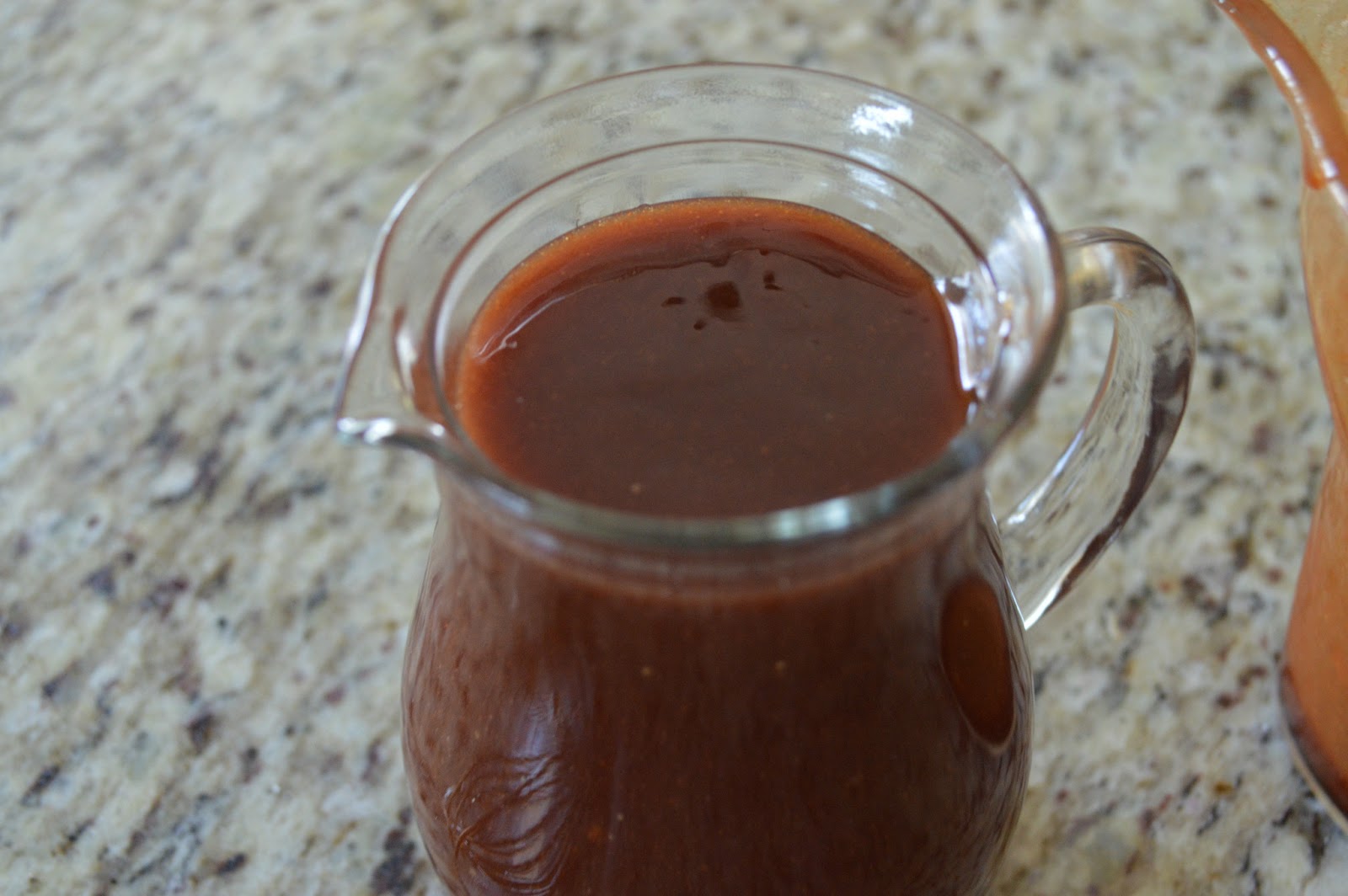
You can throw away all those bottles of barbecue sauce with all the extra ingredients that you cannot pronounce. Get ready to make a barbecue sauce that has the perfect flavor, uses ingredients you most likely already have in your pantry, and is super easy to throw together!
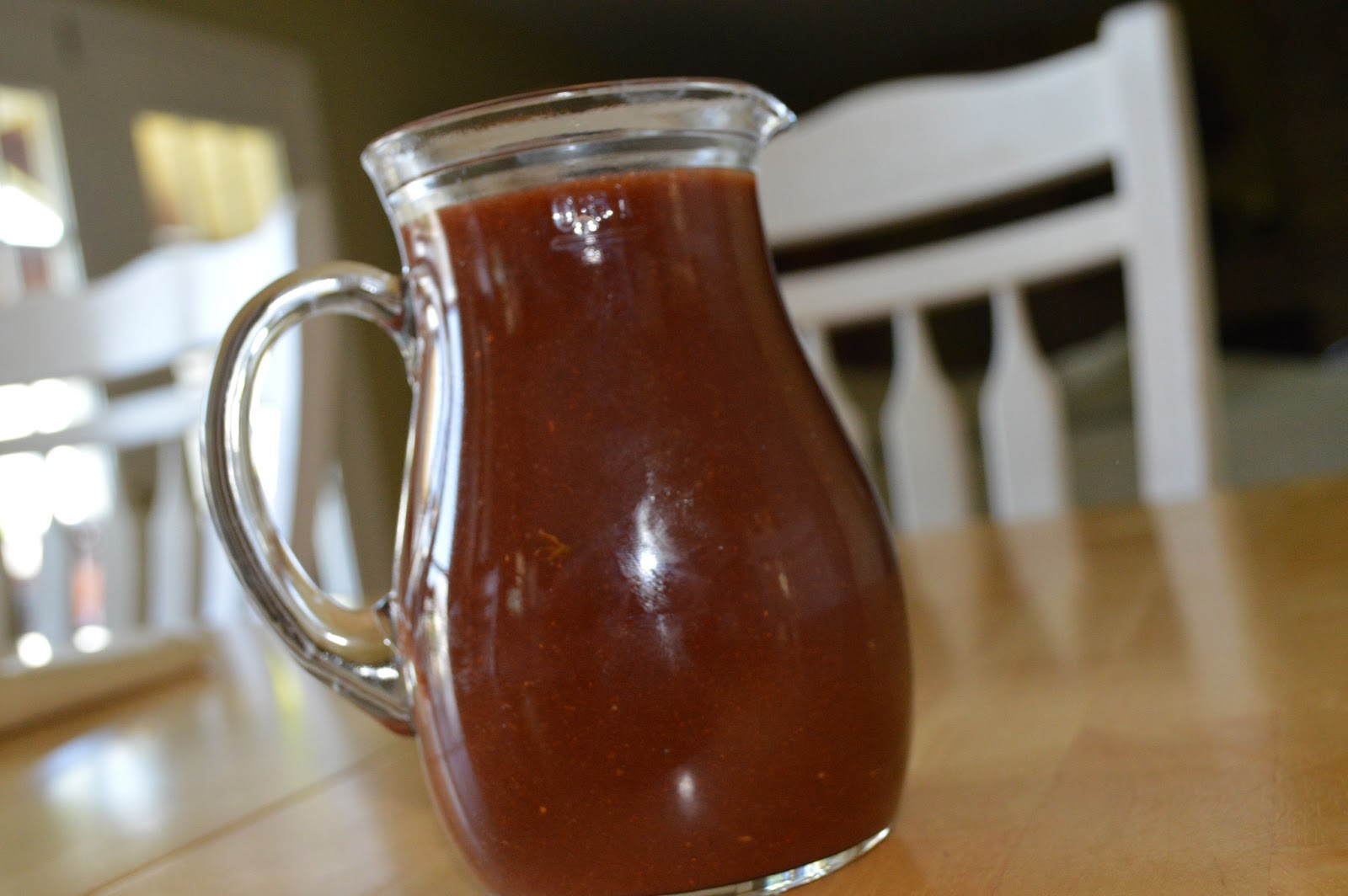
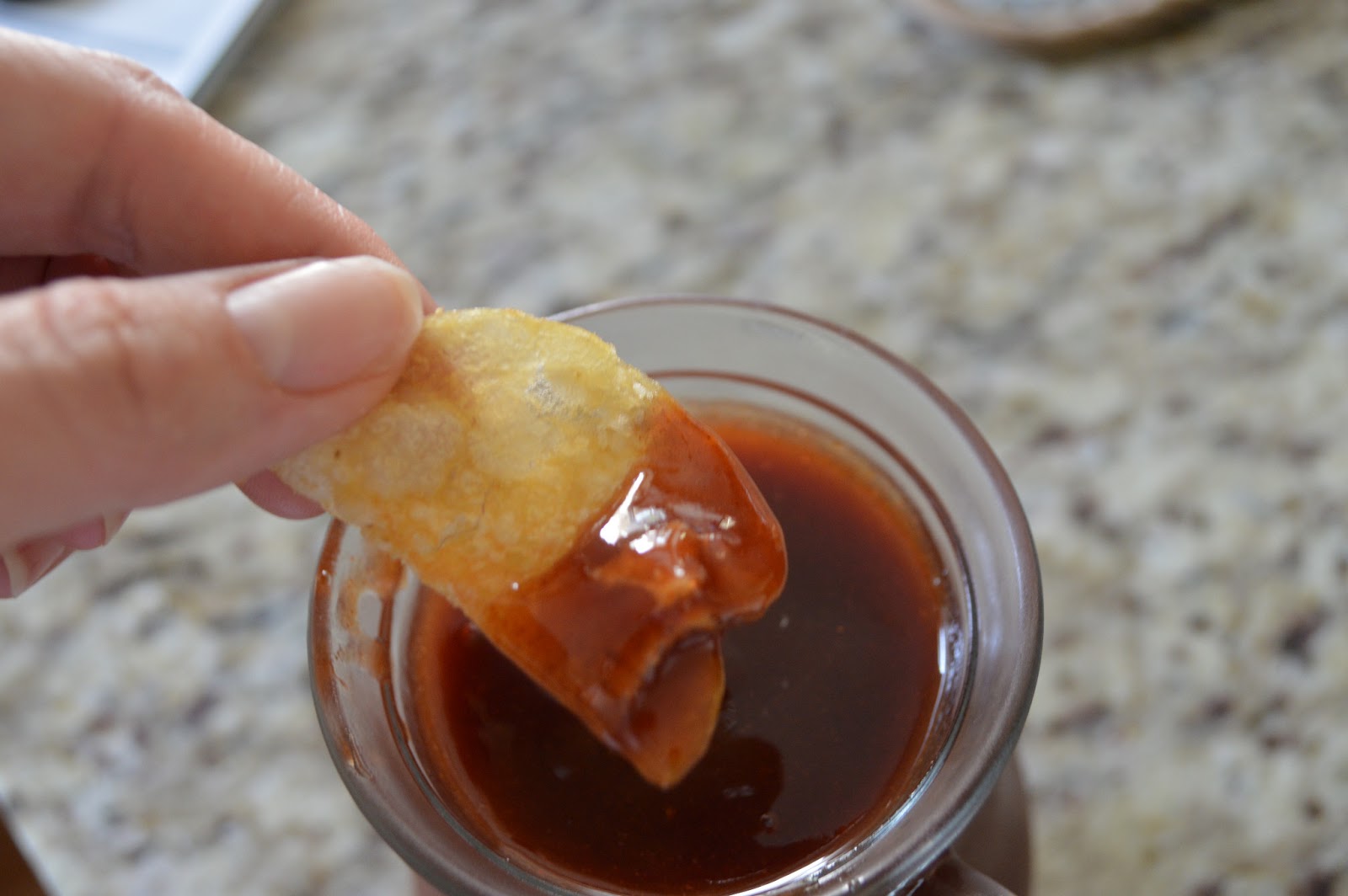
It is perfectly sweet and smoky and the flavor is better than any sauce I have tried. This would be great for chicken or beef, a dip for veggies, a spread for wraps or sandwiches, a topping for potatoes, and it makes a great drizzle on a barbecue chicken salad! It is even really tasty when you dunk a potato chip into it.
Um…I have no idea how I know that…
This makes a large quantity, and I save mine in the fridge for up to two weeks in a mason jar. If you want only enough to marinade meat, you may want to cut this recipe in half.
Or, you could make the whole batch, and enjoy tasty barbecue goodness for a while!

Homemade Barbecue Sauce

1 1/2 cups brown sugar
1 1/4 cups ketchup (I use Simply Heinz-no high fructose corn syrup!)
1/2 cup red wine vinegar
1/3 cup water
1 1/2 tblsp worcestershire sauce
2 tsp smoked paprika
2 1/2 tsp ground mustard
1 1/2 tsp salt
1 tsp pepper

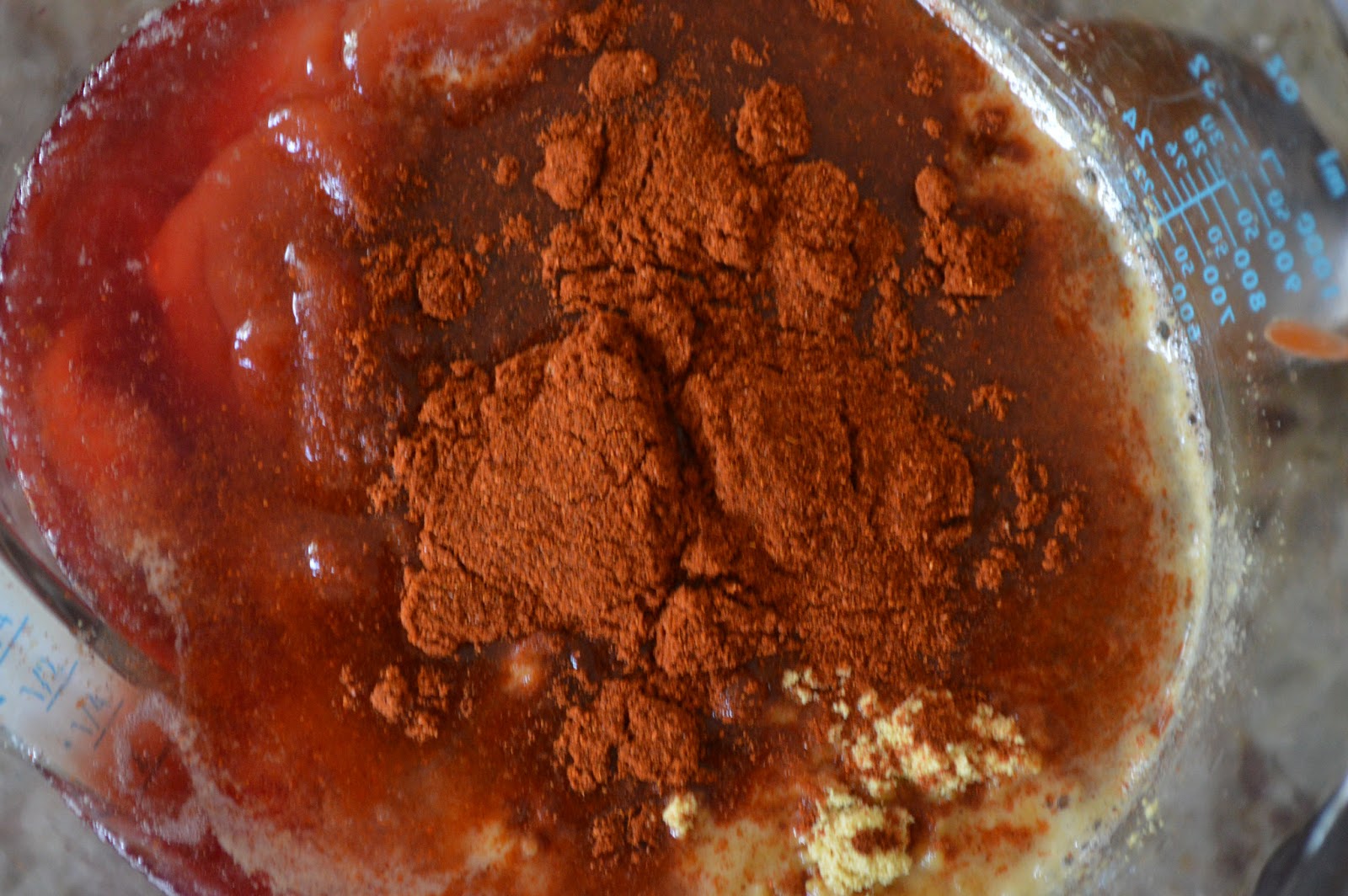
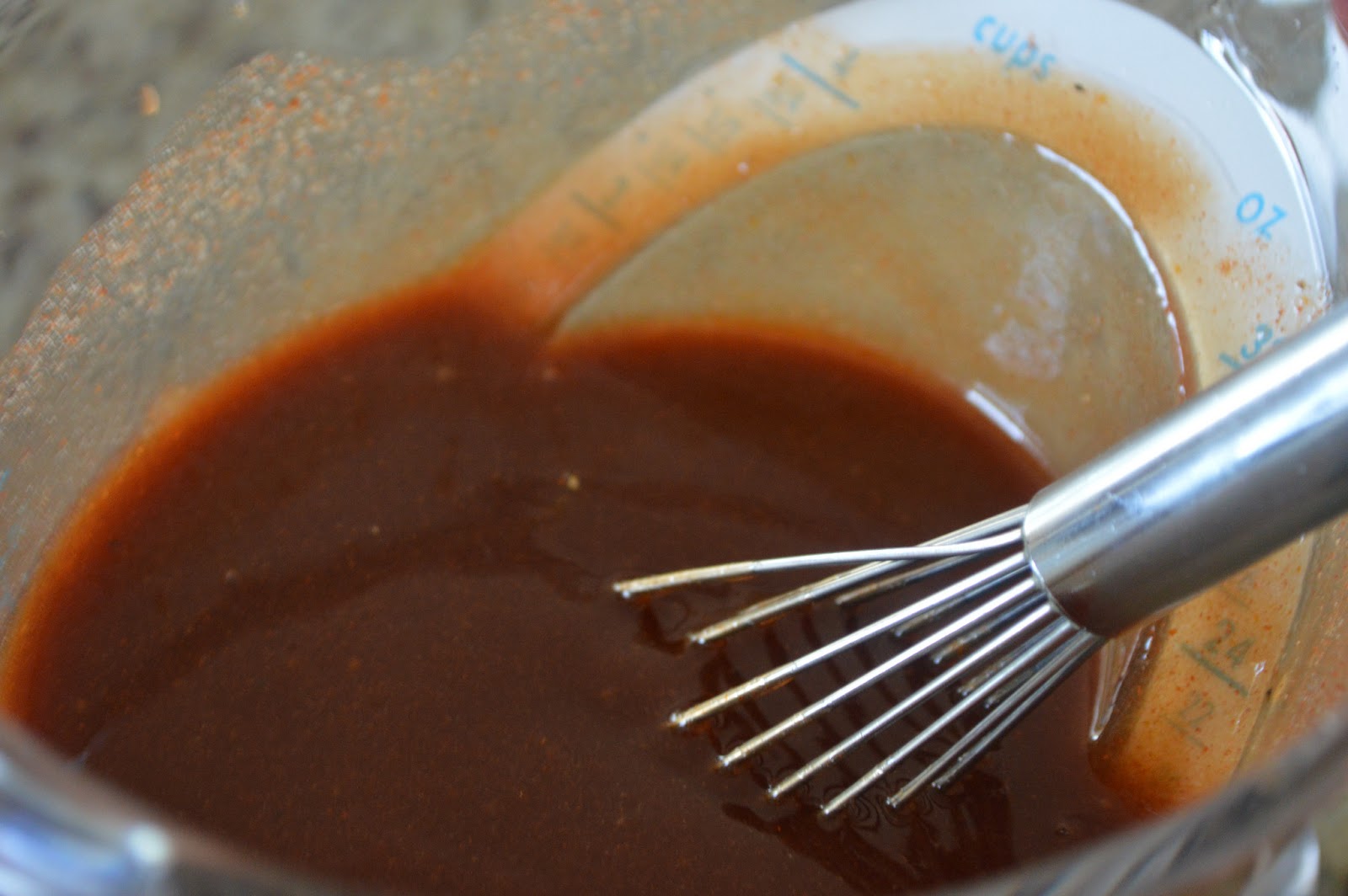
I was seriously being lazy when I made this that I mixed everything in a measuring cup!
Hey! It worked!

Whisk all ingredients together until smooth. Chill for 30 minutes. Enjoy!

Heather

Leave a Comment

Chicken & Turkey

Grilling Tips, Part 1

It’s grilling season and, in lieu of a recipe, I thought I would go out, talk to some local butchers, do some research, and find some helpful tips. Let’s start with some common grilling mistakes. By knowing the mistakes and how to avoid them, your food will, of course, be better, but also, your time will be better spent and the whole grilling experience will be more fun.

1. Let’s start with the grill itself. One common mistake that will definitely affect the flavor and look of your grilled food is not cleaning your grill properly before and after each grilling. If you don’t want your food tasting like last week’s burnt burgers, you should always keep it clean. Before grilling, let the grill preheat for 15 minutes and then scrape all the charred remains off the grate with a tough, bristled brush. After grilling, repeat the same procedure.

2.Whether your preference is gas or charcoal, allow your grill to heat thoroughly before starting to cook. Let the whole grill warm up, not just the grate where you’ll place your food. Just like an oven, close the lid and let the entire grill heat to a uniform temperature. This will help prevent overcooking or undercooking and allow for a nice tender, juicy, uniformed cooking throughout the meat.

3.  Flame-ups on the grill are not only dangerous, but they can leave a burnt, sooty taste on your food. The best way to avoid flame-ups is to allow the grill to come to an even heat. If you’re using charcoal, allow them to heat fully and become gray with ash and glowing with embers. It’s also a good idea to make a “cool spot” on the grill; a place where there are no coals or heat where you can safely move the meat to marinade without causing flame-ups or just to keep it safe if a flame-up occurs.

4. Prepping your food before you bring it to the grill is a great way to ensure that your grilled food will be getting all the attention it deserves. If you have to keep rushing back to the kitchen to retrieve or prepare items, you aren’t watching what’s happening on the grill. Be “all in” when you’re grilling and you’ll have great food and more fun.

5.  Grill with a meat thermometer. It’s the best way to ensure foods like chicken, which can be dangerous if undercooked, are completely done. Monitoring temperature will keep you from cutting into your T-bone to check its doneness and releasing all that lovely, juicy flavor into the grill where it will burn away (just like all your hopes for that steak!).

6. Let your meats come to room temperature before you begin to grill. If you don’t, the outside will cook too fast and the inside will still be cold. You’ll either end up with an undercooked piece of meat or a burnt, overcooked one, neither of which is good.

7. Turning up the heat on the grill to make your food cook faster is a no-no. Don’t let yourself get impatient when you’re grilling. More heat will make your food cook faster, but only on the outside. What you will end up with will be burnt and not very edible.

8. When cooking items like burgers, steaks, or chicken, don’t close the grill. This will just make it taste smokey and that’s not what you’re looking for. Closing the grill is best left for foods that you would normally cook for longer periods of time.

9. Most butchers agree that over seasoning is one of their biggest pet peeves when it comes to steaks. Try not to over do it with the seasonings. Let the true, delicious flavor of the meat come through. If you want, you can offer sides of dips or sauces but, try seasoning the meat with just a light dusting of salt and pepper and garlic powder first.

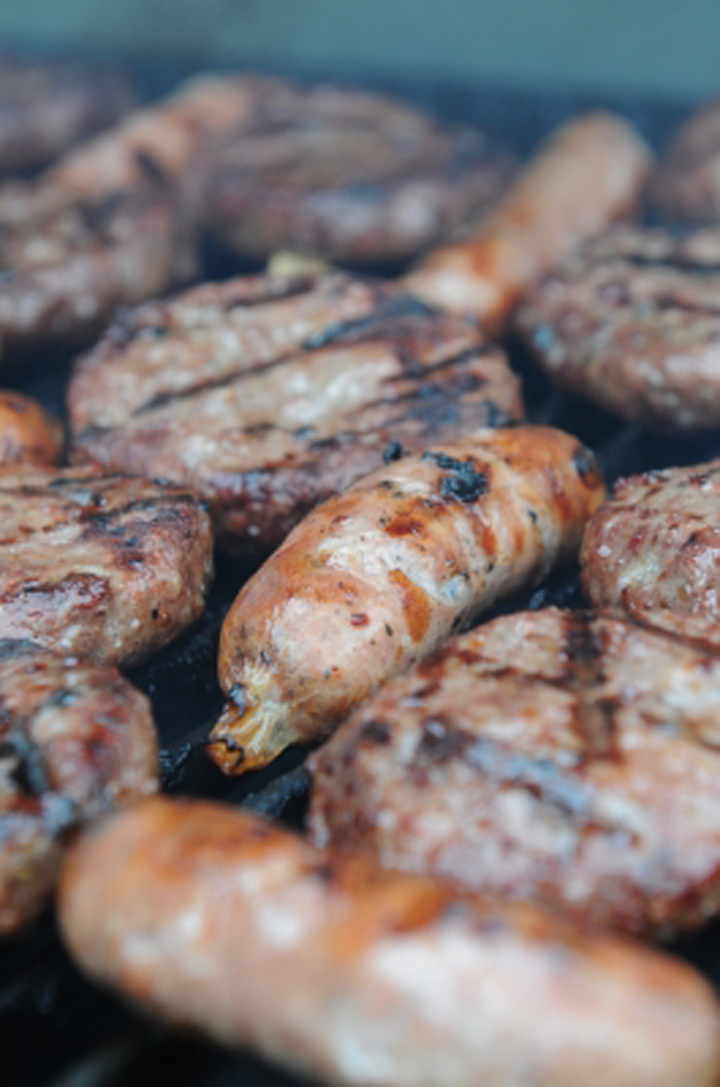
10. A big no-no (that I was guilty of for a long time) was making my burgers flat. It turns out that burgers tend to swell in the center while they’re grilling, so a good rule-of-thumb, literally, is to make an indentation with your thumb in the middle of each burger. They will hold their shape better and cook more evenly. And pressing the beef patty into the grill grate with the back of the spatula does nothing but squeeze out the juices and flavors, leaving you with a dry, flavorless burger.

11. Basting too soon is a bad habit, too. If you begin to baste your food as soon as you put it on the heat, the sugars in the sauce tend to burn immediately, which means your meat is not cooking half as quickly as the marinade is. The meat is either going to be underdone or the outside of it will taste like the charcoal you’re using to cook it. Both options sound inedible to me. So always begin your basting towards the end of the cooking time. That will ensure even cooking for both sauce and meat.

12.  Don’t flip your meat too soon. If you’re having a tough time getting your food to release from the grill, it could be because you’re turning it too soon. Meat will release itself naturally when it’s ready to be flipped. If it doesn’t, you may be dealing with problem number one again: the dirty grill.

And to make this an even bakers’ dozen, or more appropriately, a grillers’ dozen…

13. Don’t rush your food to the table. Meats need at least ten minutes to rest after cooking. This allows the juices in the meat to redistribute throughout for a tastier, juicer bite every time.

I hope this post helped you as much as it did me when I researched these tips. I feel like a better grill cook already. Here’s to a better, brighter and, one might say, smarter summer of grilling.

Heather

Leave a Comment

Vegetarian

Eggplant Rollatini

My husband and I have a favorite Italian market where we get those definitive ethnic items that you just can’t find in every supermarket. While it’s a two-hour drive, we often go out of our way to visit Tenuta’s in Kenosha, WI, a tiny neighborhood store packed with pastas, cheeses, wines, spices, and every imaginable Italian delicacy.

Tucked in amongst all the other products is a deli counter where they sell fresh meats, cheeses, and the most delectable array of fresh, ready-to-eat treats. Last time we were there we decided to try their eggplant rollatini. It was out of this world. We had three to split and, I don’t mind telling you, we fought over the last roll like it was the last edible thing on the planet. I love my husband, but if he wasn’t driving, I would have contemplated shoving him out of the car.
 
Instead, I decided to split the last one with him and then try to recreate them at home. That way we could each eat our fill and even have leftovers. It was better than a life sentence! (I was worried they wouldn’t let Tenuta’s deliver rollatinis to me in the big house!)

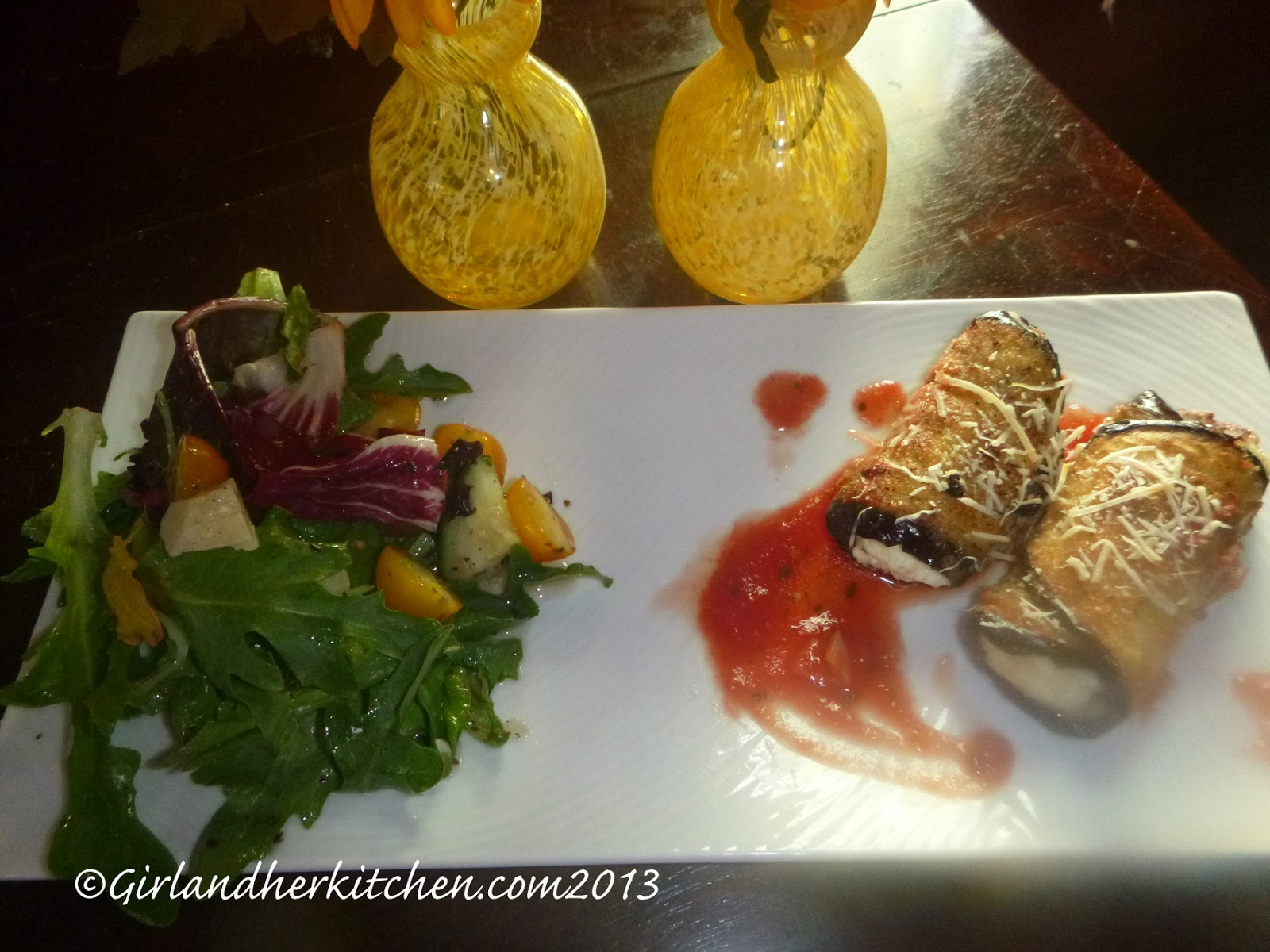
After a bit of reverse engineering, I figured out a recipe and went to work. It turned out perfectly. It was crispy and creamy, savory and succulent; everything I was hoping for and more. When we ate them from Tenuta’s they had come out of the refrigerated deli case and were still delicious cold, so when I made them at home, the taste of one hot out of the oven made them even more amazing than I dreamed.

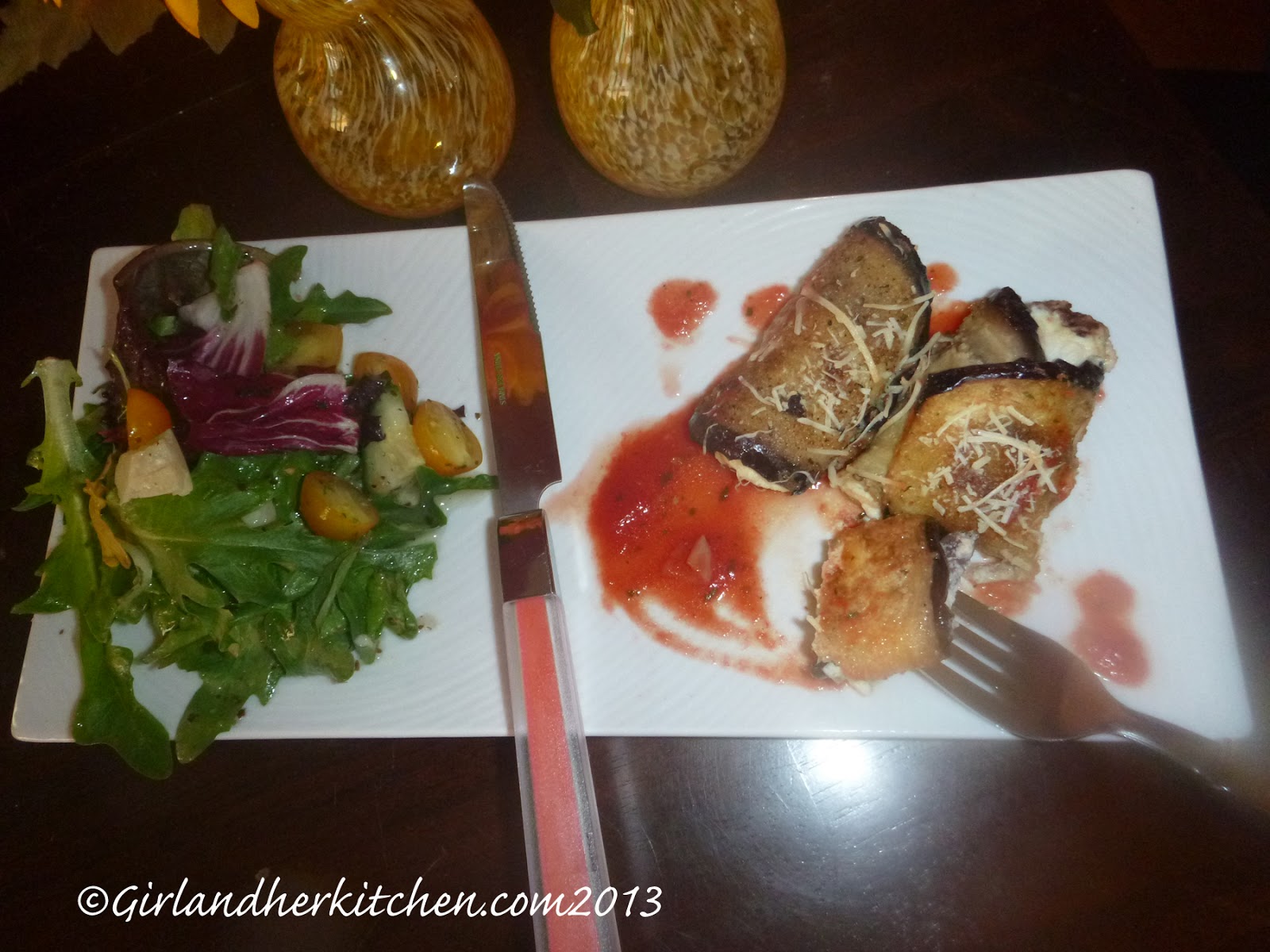
The eggplant is cooked to a delicate crispness while the creamy ricotta filling is flavorful and unctuous. Add a little marinara and it’s the perfect flavor combination. I added a lovely green salad and some crisp Italian bread. And, don’t forget the red wine. It’s magnificent.

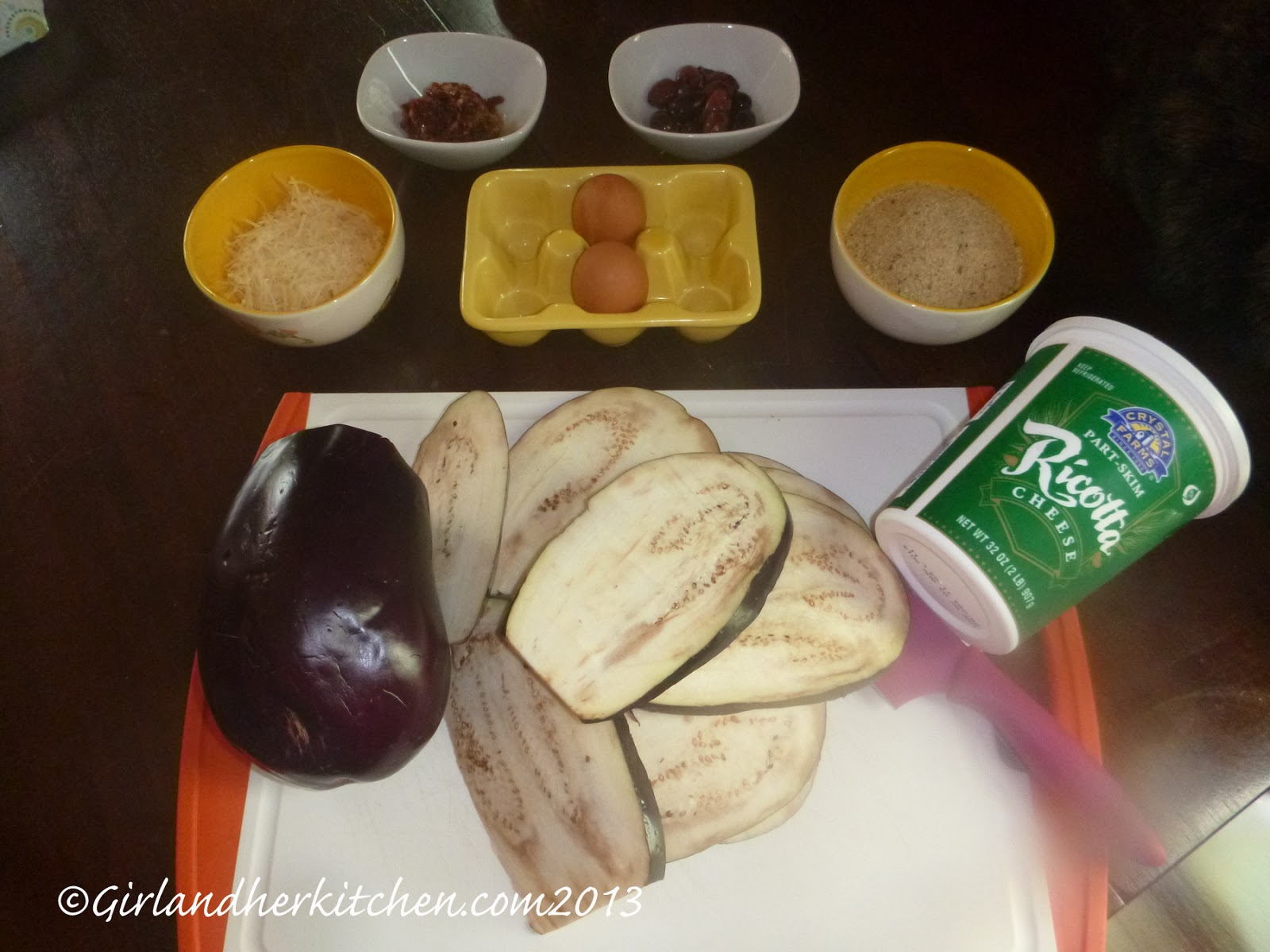
1 Large eggplant, sliced 1/4 inch thick (peel if you like)
2 eggs
1 cup bread crumbs
1 cup ricotta cheese
1/4 cup sun dried tomatoes in oil, diced finely
1/4 cup Kalamata olives, pitted and diced finely
1 cup shredded Parmesan cheese
1 cup marinara sauce, homemade or jarred

Mix 1 egg with a Tbs. of water and beat together. Dip the eggplant slices into the egg and then into the bread crumbs to coat. Pour a liberal amount of olive oil into a large frying pan over medium-high heat. Fry eggplant until its golden brown on each side. Place on a cookie sheet covered with paper towel to drain any excess grease. Preheat your oven to 350 degrees.

In a large bowl combine ricotta, 1/2 cup of the Parmesan, and the remaining egg. Separate into three bowl. Add olives to one bowl, tomatoes to one bowl, and leave the last bowl as it is.

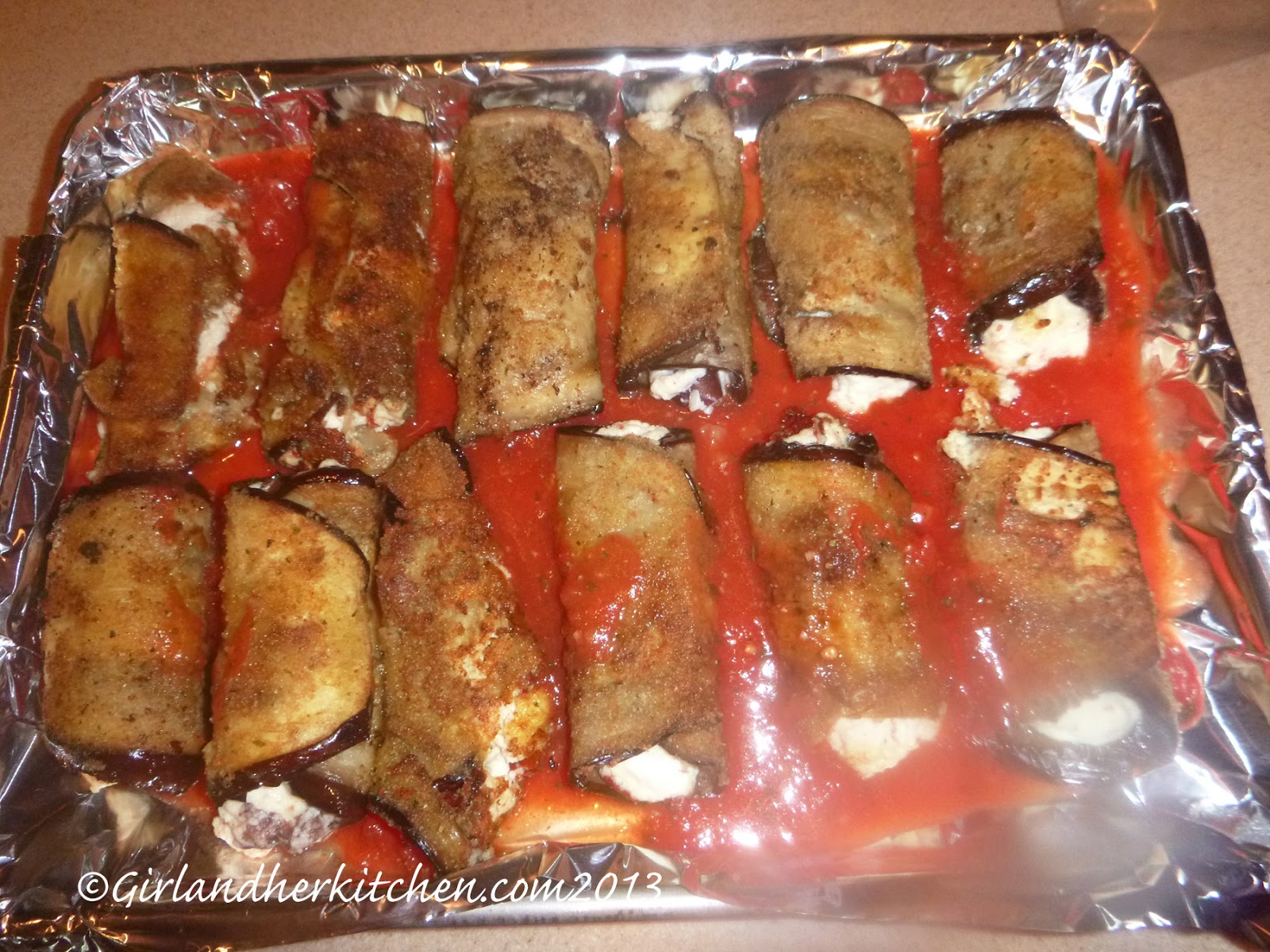
Take a baking sheet or pan and cover the bottom with marinara sauce. Take a slice of eggplant, put a spoonful of ricotta mixture in it and roll up. Place seam side down in pan with sauce. Repeat until all eggplant and ricotta mixtures are gone. (I don’t cover my eggplant in sauce because I hate to lose the crispy coating I’ve created in the frying portion of the recipe.) Sprinkle rollatini with remaining parmesan cheese shreds.

Place the pan with rollatinis in the oven and bake for 20 minutes. Serve with extra sauce on the side and, of course, more Parmesan, because how can you ever have too much of that?

Heather

2 Comments

  • « Previous Page
  • 1
  • …
  • 19
  • 20
  • 21
  • 22
  • 23
  • …
  • 38
  • Next Page »

Heather

I am a midwestern girl who grew up in the big city, but now enjoys her days as a stay at home mom in the suburbs. Who says spending time in the kitchen has to be boring? I hope to inspire your family kitchen with some new ideas, fun recipes and great tips.

Stay Up to Date

Get all the latest tasty goodness straight to your inbox!

Girl and her Kitchen

Join us!
Hey! I am the GIRL in the kitchen and I am so glad you decided to visit. Love to cook and eat? You will find some great recipes on this site, whether you are looking to eat healthy, splurge on a dessert, make dinner or host a party-I have it all! Sometimes I’ll give you a story along with my recipe, other times, I want to take you straight to the food!  Whatever the reason that you decided to visit, I am so glad you joined me in the kitchen! Feel free to take a look around the site, and please…stay awhile!
Archives

Popular Categories

  • Appetizers
  • Breakfast
  • Crafts
  • Salads and Dressings
  • Side Dishes
  • Vegetables and Fruit

Most Popular Posts

Corner Bakery Cafe Giveaway!

Corner Bakery Cafe Giveaway!

Filed Under: Reviews

Bacon Cheddar Skillet Cornbread

Bacon Cheddar Skillet Cornbread

Filed Under: Breads, Quick Breads and Rolls, Side Dishes

Puffy Pancakes {Perfect for Valentine’s Day!}

Puffy Pancakes {Perfect for Valentine’s Day!}

Filed Under: Breakfast, Valentine's Day

100 Days of Real Food Cookbook Review {and Giveaway!}

100 Days of Real Food Cookbook Review {and Giveaway!}

Filed Under: Vegetarian

Copyright © 2026 · Divine theme by Restored 316